How to find a riad you will actually sleep in and when to walk the medina
A sound map of the Marrakech medina for picking a riad where you can actually sleep, plus why 6am is the hour that changes everything.
- Flag
-

- ISO code
- MA
- Population
- 995,871
- Currency
- MAD
- Timezone
- Africa/Casablanca
How to Find a Riad You Will Actually Sleep in and When to Walk the Medina
At 5:45 AM the call to prayer from the Koutoubia Mosque cuts through the pre-dawn silence. The scooters are still parked. The souk alleys are empty. This is the hour when Marrakech belongs to you and the street sweepers. By 10:30 PM the same streets roar with two-stroke engines, rooftop bar bass, and the laughter of travellers who cannot find their riad. The difference between a good trip and a ruined one is 200 metres.
Every riad in the medina sits inside a derb, a dead-end alley off a larger lane. The medina is 600 hectares of passages one to three metres wide. None of them take a car. Walk from Bab Laksour, Bab Doukkala, or Place Jemaa el-Fnaa with a porter pulling a hand-pulled barrow. That porter costs MAD 50-100 per trip and is your first informant. Watch where he hesitates. The derbs he refuses to enter after dark are the ones that never sleep.
The Sound Map of the Medina
The medina has a noise contour unrelated to distance from Jemaa el-Fnaa. The square itself is loud until 2:00 AM, but sound does not travel through these alleys the way it does on a boulevard. The worst noise comes from two-wheelers echoing through long, straight derbs. A riad 200 metres from the square but tucked behind a 90-degree turn in a cul-de-sac derb can be silent at midnight. A riad 600 metres away on a through-lane that connects two major souk arteries becomes a nightmare until 1 AM because riders use it as a shortcut.
Book a riad on a derb that ends in a wall. The shorter the derb, the less traffic. If the listing shows a position on Souk Semmarine, Souk el-Kebir, or Souk des Babouches, assume heavy foot and engine noise until 11 PM. If it sits on a derb with fewer than five doors, you have a chance at quiet. Message the riad directly: "What time do the bikes stop on your street?" If they cannot answer, keep looking.
When the Souk Crushes and When It Empties
Do not enter the souk between 11:00 AM and 5:00 PM. The crowd density on the main arteries turns it into an obstacle course. The vendors know this. Initial asking prices in those hours run 200-400% above the final sale price because they assume you are a day-tripper in a hurry. Your first counter-offer: 30-40% of the asking price. You will settle somewhere in the middle if you pay cash. Card payments produce a higher final price.
The quiet windows are 9:00 AM to 10:30 AM, and Sunday mornings for most of the day. Stallholders are still setting up and the day-tripper buses have not arrived. You walk Souk Semmarine in 10 minutes instead of 40, and you examine goods without a vendor pulling you into his shop. The trade-off: fewer stalls open. But the ones that do negotiate honestly because they are bored.
Ramadan 2026 runs 18 February to 19 March. The souks close by 4:00 PM to 5:00 PM. Alcohol service stops at most riads. The medina is quieter in the daytime and busier after sunset. Test your bargaining skills in the late afternoon. Vendors want to close and go home for iftar. Prices drop.
The 6 AM Walk Versus the 5 PM Crush
Set your alarm for 5:30 AM one morning. Exit your riad at 6:00 AM. The medina at that hour is a different city. The temperature in July is 21 degrees instead of 37. The only people on the streets deliver bread and sweep the alleys. Jemaa el-Fnaa has juice stalls and street sweepers but almost no tourists. Photograph the Koutoubia minaret without anyone in the frame. The muezzin calls echo across the rooftops without engine interference. By 7:30 AM the first tour groups arrive at the souk entrances. You have had your hour.
The 5:00 PM medina tests your patience. The souks are shoulder-to-shoulder. Bikes thread the alleys every 30 seconds. The food stalls on Jemaa el-Fnaa fire up charcoal and smoke fills the square. The temperature still sits above 30 degrees even in October. Do not schedule shopping for 5 PM. Schedule a rooftop terrace with a drink instead.
Which Riad Tier Works for Your Nights
Entry-level riads cost MAD 400-800 per night in 2026 rates. They include breakfast, an en-suite bathroom, and interior courtyard access. They rarely have soundproofing. Prioritise the derb location above all other factors. A cheap riad on a quiet cul-de-sac beats a cheap riad on a through-lane every time.
Mid-level riads at MAD 800-1,800 add a plunge pool, hammam, rooftop terrace, and air conditioning in all rooms. The rooftop terrace matters for noise. Climb up at 10 PM and see whose neighbours are throwing a late party. A terrace with high walls on both sides blocks the sound. One that overlooks adjacent rooflines lets you hear everything.
Top-level riads from MAD 1,800 to 5,000 and above come with full staff, a heated pool, private hammam, and on-site kitchen. They occupy the largest derbs because they need space for the pool and salons. That can mean more passing bikes. Ask the manager: "Can you guarantee the room away from the street?" A good top-level riad has a rear room or a second-floor room that blocks the alley noise.
Getting Into and Out of the Medina: The Drop Points
You cannot arrive at your riad by car. The airport taxi drops you at the nearest vehicle-accessible point. The fixed rate is MAD 70-150 depending on your zone. Bab Laksour is the northern gate with easiest access to the northern souks. Bab Doukkala serves the western medina. Place Jemaa el-Fnaa is the southern entry and the most convenient for riads near the square. Tell the driver which riad you booked. If they name a different drop point than you expected, they are probably right.
Budget for the porter. MAD 50-100 is standard. The porter hauls your luggage on a hand-pulled barrow through alleys too narrow for anything else. Tip on top of the listed price if your riad sits more than a 10-minute walk from the drop point. Do not tip so high that you become a target, but MAD 20-30 extra for a 15-minute walk through twisting derbs is fair.
The Ville Nouvelle, founded in 1913 during the French Protectorate, offers door-to-door taxi access. If you value convenience over atmosphere, stay there. You pay for it with a 20-minute walk to Jemaa el-Fnaa and zero experience of the medina's early-morning character.
What the Riad Will Actually Give You
Every riad is designed around an interior courtyard open to the sky. Noise from neighbouring rooftops drops straight down into the central atrium. Rooms facing the courtyard hear the muezzin calls from four directions at once. Rooms facing the street hear the engines. The quietest option in most riads: a top-floor room with windows only to the exterior. If you are a light sleeper, request a top-floor exterior room at booking and confirm it three days before arrival. If the riad cannot guarantee it, bring earplugs. You will need them.
A local hammam costs MAD 10-30 entry and another MAD 30-60 for a scrub. Bring your own soap, scrub mitt, towel, and change of clothes. A mid-range spa hammam costs MAD 250-500. A hotel hammam costs MAD 600-1,200 for 45-60 minutes and includes a private room, products, and post-scrub tea. Book the hotel hammam after a 6 AM medina walk. The heat and the scrub reset you for the afternoon.
Marrakesh rewards the traveller who wants to sleep through the night and walk the medina before the crowds arrive. It is not for the person who wants a hotel pool and room service on call. That person belongs in the Ville Nouvelle or in one of the Palmeraie resorts 10 minutes outside the city walls. It is also not for the backpacker on a MAD 200 budget; the entry-level riads here start at MAD 400. For everyone else, the medina works if you pick the right 200 metres of derb and set your alarm for 5:30 AM. The rest is just noise.

.jpg)
More on Marrakesh
-
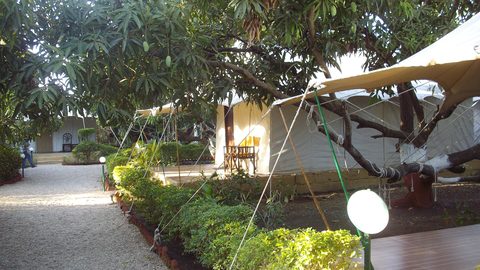 Marrakech glamping and when the tent is actually worth the price
When Marrakech glamping is a genuine desert night with fire and silence, and when it is just an expensive tent with a photo opportunity.
Marrakech glamping and when the tent is actually worth the price
When Marrakech glamping is a genuine desert night with fire and silence, and when it is just an expensive tent with a photo opportunity.
-
 Talking to Marrakech Travel Writers About What They Do Differently
Marrakech travel writers explain how they vet medina fixers, talk to riad owners off-record, and why they refuse free hammam treatments.
Talking to Marrakech Travel Writers About What They Do Differently
Marrakech travel writers explain how they vet medina fixers, talk to riad owners off-record, and why they refuse free hammam treatments.
-
 How to Read a Marrakech Destination Guide Without Getting Burnt
Marrakech destination guides carry specific biases in their medina maps, riad listings, and restaurant picks. Learn to read them critically.
How to Read a Marrakech Destination Guide Without Getting Burnt
Marrakech destination guides carry specific biases in their medina maps, riad listings, and restaurant picks. Learn to read them critically.
-
 Marrakech Hotels With Resident Animals and What That Actually Means
Some Marrakech hotels keep peacocks, tortoises, and camels. Here is how to separate genuine animal care from a lobby photo opportunity.
Marrakech Hotels With Resident Animals and What That Actually Means
Some Marrakech hotels keep peacocks, tortoises, and camels. Here is how to separate genuine animal care from a lobby photo opportunity.
Common Questions
How do I know if a riad is on a quiet derb before I book?
Use satellite view on the booking map. Look for a derb that ends in a wall and has fewer than five distinct rooflines visible. Then message the riad directly: 'What time do motorbikes stop passing on your street?' If the reply mentions midnight or later, look elsewhere.
What is the worst noise I should expect in a medina riad?
Motorbike engines echoing down a straight, open derb are the most disruptive noise. Rooftop bar bass from neighbouring buildings is second. Muezzin calls are loud but predictable and brief, lasting three to five minutes five times a day. The motorbikes have no schedule.
Can I take a taxi to the riad door?
No. Zero per cent of medina riads have direct vehicle access. The taxi drops you at Bab Laksour, Bab Doukkala, or Place Jemaa el-Fnaa. A porter with a hand-pulled barrow will carry your luggage the rest of the way for MAD 50-100.
Is the medina safe to walk at 6 AM?
Yes. The 6 AM medina has street sweepers, delivery men, and almost no tourists. The souks are closed. Jemaa el-Fnaa has juice stalls only. Crime rates in the medina are low during morning hours because local commerce is waking up. Use the same street awareness you would in any dense urban centre.
When is the worst time to be in the souk?
Saturday 11:00 AM to 5:00 PM is the busiest window. The souk arteries are shoulder-to-shoulder, the heat peaks, and vendor asking prices are at their highest. Sunday mornings before 10:30 AM are the quietest.
Read next
-
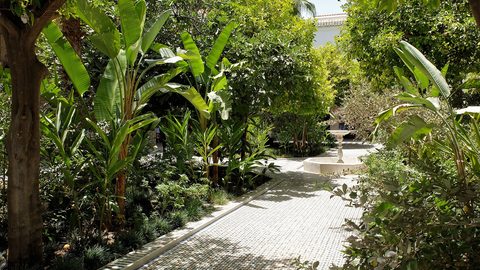 Marrakesh Hotels and Riads What the Upgrade Genuinely Buys
Marrakesh hotels and riads range from unheated courtyard dars to Hivernage five-stars. Here is what the extra dirhams actually buy you beyond the photographs.
Marrakesh Hotels and Riads What the Upgrade Genuinely Buys
Marrakesh hotels and riads range from unheated courtyard dars to Hivernage five-stars. Here is what the extra dirhams actually buy you beyond the photographs.
-
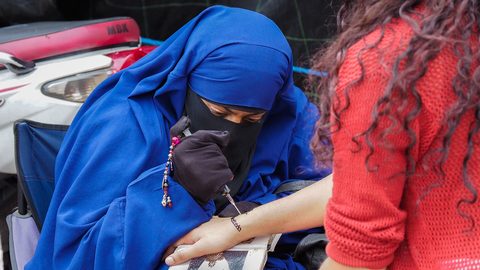 Where to Stay in Marrakesh Medina, Hivernage or the Palmeraie
Where to stay in Marrakesh comes down to one question: how much medina chaos can you genuinely tolerate? Here is what each district actually delivers.
Where to Stay in Marrakesh Medina, Hivernage or the Palmeraie
Where to stay in Marrakesh comes down to one question: how much medina chaos can you genuinely tolerate? Here is what each district actually delivers.
-
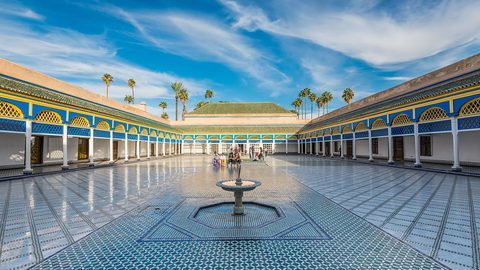 Marrakesh Things to Do Worth the Queue and What I Would Skip
Marrakesh things to do range from the genuinely magnificent to the queue-filled letdown. Here is where to spend your time and what to skip without guilt.
Marrakesh Things to Do Worth the Queue and What I Would Skip
Marrakesh things to do range from the genuinely magnificent to the queue-filled letdown. Here is where to spend your time and what to skip without guilt.
-
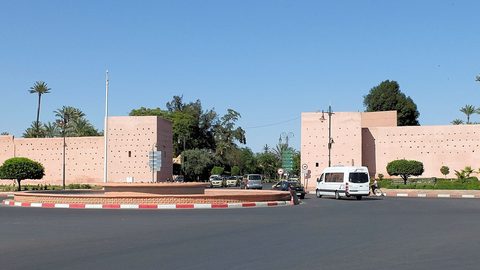 Best Time to Visit Marrakesh for Bearable Heat Fair Rates and Fewer Crowds
The best time to visit Marrakesh is November or March–April when daytime temperatures sit at 22–28°C. Here is when to go, when to avoid, and why winter evenings surprise people.
Best Time to Visit Marrakesh for Bearable Heat Fair Rates and Fewer Crowds
The best time to visit Marrakesh is November or March–April when daytime temperatures sit at 22–28°C. Here is when to go, when to avoid, and why winter evenings surprise people.
-
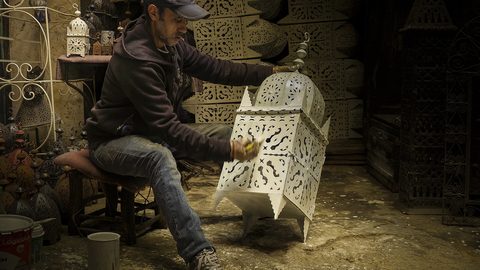 Getting Around Marrakesh When the Taxi Cannot Reach Your Riad
Getting around Marrakesh means mastering petit taxis with broken meters, medina lanes where Google Maps fails, and the No. 19 airport bus that everyone overlooks.
Getting Around Marrakesh When the Taxi Cannot Reach Your Riad
Getting around Marrakesh means mastering petit taxis with broken meters, medina lanes where Google Maps fails, and the No. 19 airport bus that everyone overlooks.
-
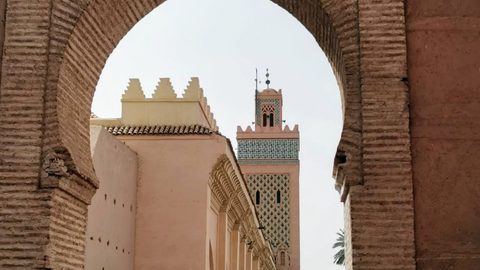 Three Days in Marrakesh Without Spending All Three in Queues
Three days in Marrakesh is enough if you sequence it right. Here is an itinerary that avoids the queues, the backtracking, and the midday heat.
Three Days in Marrakesh Without Spending All Three in Queues
Three days in Marrakesh is enough if you sequence it right. Here is an itinerary that avoids the queues, the backtracking, and the midday heat.
-
Marrakech glamping and when the tent is actually worth the price
When Marrakech glamping is a genuine desert night with fire and silence, and when it is just an expensive tent with a photo opportunity.
-
Talking to Marrakech Travel Writers About What They Do Differently
Marrakech travel writers explain how they vet medina fixers, talk to riad owners off-record, and why they refuse free hammam treatments.
-
How to Read a Marrakech Destination Guide Without Getting Burnt
Marrakech destination guides carry specific biases in their medina maps, riad listings, and restaurant picks. Learn to read them critically.