The line-by-line cost of a Tanzanian safari and what each lodge tier buys
A line-by-line dissection of what a $400, $800 and $1500 Tanzanian safari lodge actually buys, from vehicle exclusivity to river crossing access.
- Flag
-

- ISO code
- TZ
- Population
- 56,318,348
- Currency
- TZS
- Dial code
- +255
What the Price Actually Buys on an African Safari Lodge by Lodge
A camp at $400 a night and one at $1500 both put you in the bush. But one drops you at a gate 45 minutes from the first lion sighting, in a shared truck with seven strangers. The other starts the game drive at your tent flap, in your own Land Cruiser, with a specialist who knows where the river crossing will happen tomorrow. The gap is not luxury. It is access to animals. Here is the line-by-line breakdown of a Tanzanian safari quote and what each tier buys for sightings, solitude, and time.
The $400 Per Night Camp: What You Get and Where it Fails
A budget camp at USD 250 to 450 per person per night in 2026 includes accommodation, meals, house drinks, game drives, park fees, and airstrip transfers. That is a genuine all-in rate. But look at the transport: a shared open-sided 4x4 with up to six or eight guests and no guaranteed window seat. Sit in the middle row and you spend every sighting craning past someone else. Your driver-guide is a freelance operator with variable certification and basic English. You will get an answer to "what bird is that?" maybe in Swahili.
Location Is The Hidden Cost
Budget camps sit outside park boundaries. That means 30 to 90 minutes of driving to the gate each morning, then another 20 minutes to prime game-viewing areas. In the Serengeti, where the migration moves fast, you lose the first and last hour of daylight when predators are active. You also queue at the gate with every other budget truck arriving at the same time.
When this tier works: Tarangire and Lake Manyara. The game density in those parks is high enough that the location penalty matters less. You see elephants and zebras within 15 minutes of entering. For a three-day safari, the budget option delivers.


The $800 Per Night Camp: the Middle Ground That is Often a False Economy
Mid-range lodges at USD 450 to 900 per person per night sound like the smart compromise. You get a lodge-employed guide with Bronze or Silver level local certification, a shared 4x4 capped at four to six guests, and a location inside the park or on its immediate boundary. Drive time to prime game-viewing areas drops to 5 to 20 minutes. That is a real upgrade.
But mid-range is a false economy in certain parks and seasons. Book a mid-range lodge in the central Seronera area and you avoid the gate queue. You pay a fair price for a permanent camp inside the park. That is the value sweet spot. Book a mid-range camp in the northern Serengeti during July to October, when the Mara River crossings happen, and you still share a truck. You still park behind six other vehicles at a crossing because the lodge put four groups on the same schedule. The camp sits inside the park but the area is narrow, the migration corridor is constrained, and every mid-range operator sends every vehicle to the same two river points. You spend USD 800 a night to watch wildebeest from the back of a queue.
When Mid-Range Is The Right Call
Book mid-range in the central Seronera area. The game density is high year-round. Permanent lodges inside the park avoid gate queues without charging conservancy premiums. For a three-night stay in Seronera, mid-range is the correct choice.
Avoid mid-range for the northern Serengeti during river-crossing season and for the Ngorongoro Crater rim. The crater rim lodges charge a premium for altitude and view. But every vehicle, budget or top-tier, faces the same six-hour limit on the crater floor and the same morning descent queue. Paying USD 800 for a crater rim room does not improve your animal time. For a contrast in what your money buys, Marrakesh riads offer resident tortoises and storks instead of crater views, yet the animal encounter is entirely uncrowded and unscheduled.
The $1500 Per Night Camp: What You Are Actually Buying
Top-tier camps at USD 900 per person per night and above buy one thing the lower tiers cannot: control. Control of your schedule, your vehicle, your guide, and your location.
You get a private 4x4 with a dedicated driver-guide who holds Silver or Gold level certification, often a specialist in ornithology or wildlife photography, with continuous training. The truck is yours. Seat count is irrelevant because nobody else rides in it. When a leopard kills 10 km away, you drive there. You do not vote.
The camp sits inside the park or on a conservancy. Game drives start at the doorstep, not after a commute. Conservancies permit off-road driving, night drives, and walking safaris. National parks restrict driving to roads and daylight hours only. In a conservancy, vehicle density at a sighting is one or two trucks. In a national park, a big cat sighting can draw 20 or more. You pay the premium to avoid the crowd.
What The Room Buys
A plunge pool, canvas walls with full plumbing, in-room WiFi, complimentary laundry, premium bedding, no neighbour sightlines. The food is not a buffet. You get single-origin coffee, estate wines, bush breakfasts with a full kitchen setup, and dining alone in a location of your choice.
When Top Tier Is Worth The Money
Northern Serengeti during the river-crossing season from July to October. The Mara River corridor is narrow. Everyone wants to be there. A top-tier camp puts you on a conservancy adjacent to the river, with off-road access and a guide who knows where the crossing will form. You watch from your own vehicle while 12 other trucks wait behind a rope line.
Conservancies in the eastern Serengeti for walking safaris and night drives. These are experiences you cannot have inside a national park. The conservancy fee runs USD 40 to 120 per person per night on top of the camp rate. That fee buys empty land and unrestricted movement.
A fly-in safari from Arusha takes one to two hours of flight time versus six to eight hours driving. The luggage restriction is a soft-sided bag only, at 15 kg total per person on most bush planes. Top-tier camps expect this. Budget and mid-range camps assume you arrived by road with no weight limit. If you fly, pay for the camp that handles the logistics.
When The Famous Option Is Not The Good One
Ngorongoro Crater rim lodges. You pay an altitude and view premium but the crater-floor game drive is the same six-hour limit for all vehicles, and the morning descent queues erase any location advantage. Skip the rim. Stay at a lodge in the highlands or the Lake Manyara area and drive up at dawn.

,_Flusspferde_--_2024_--_1879.jpg)
The Honest Caveat About Tiered Safari Pricing
A top-tier camp does not guarantee a river crossing. The migration is wild. The wildebeest cross when they cross. No vehicle, no guide, no concierge can force a herd into the water. A top-tier camp guarantees you the best position to watch if the crossing happens and the best off-ramp to a different sighting if it does not. The budget camp guarantees you a seat, eventually. Choose your tier based on how much you want to control the day, not on how much you want to spend.
Frequently Asked Questions
What is the biggest performance difference between a budget and a top-tier Tanzanian safari lodge?
The vehicle and your guide. Budget camps put six to eight guests in a shared truck with a freelance guide who may have basic English. Top-tier camps give you a private 4x4 with a Silver or Gold certified specialist guide. That changes how many animals you see and how much you learn about them.
When should I book a mid-range lodge instead of top tier?
Book mid-range for the central Seronera area. The game density is high year-round, permanent lodges inside the park avoid gate queues, and you do not need a private vehicle because sightings are frequent and close.
Is a private conservancy worth the extra cost?
Yes, if you want off-road driving, night drives, or walking safaris. National parks restrict driving to roads and daylight hours. Conservancies permit all three and limit vehicle density to one or two trucks per sighting versus 20 or more in a park.
What is the tipping expectation for a top-tier driver guide?
USD 15 to 25 per guest per day for a top-tier driver guide. Budget and mid-range guides expect USD 10 to 15 per guest per day. Camp staff across all tiers expect USD 5 to 10 per guest per day, usually to a communal box.
What are the park fees for the Serengeti in 2026?
The Serengeti non-resident adult fee for 2026 is USD 82.60 per person per 24 hours, published by the Tanzania National Parks Authority. Ngorongoro is USD 83.20. Tarangire and Lake Manyara are USD 53.10 each.
Is a mid-range lodge on the Ngorongoro Crater rim a good deal?
No. You pay a premium for the altitude and view but every vehicle faces the same six-hour limit on the crater floor and the same morning descent queue. The location advantage disappears at dawn.
What luggage restrictions apply to fly-in safaris?
Most bush planes allow one soft-sided bag only, up to 15 kg total per person. Drive-in safaris have no strict weight limit and hard cases are permitted. If you fly, pack light and confirm the limit with the camp.
Read next
-
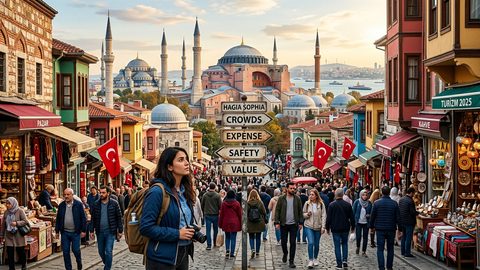 Turkey in 2025 — Whether the Cost, Crowds and Safety Trade-offs Are Worth It
Turkey in 2025 offers genuine appeal but demands honest planning. A candid breakdown of costs, seasonal crowds, safety realities and who should actually commit.
Turkey in 2025 — Whether the Cost, Crowds and Safety Trade-offs Are Worth It
Turkey in 2025 offers genuine appeal but demands honest planning. A candid breakdown of costs, seasonal crowds, safety realities and who should actually commit.
-
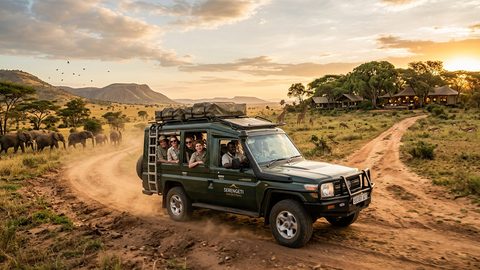 Why the Journey to Your Safari Camp Deserves as Much Planning as the Stay
Getting to a remote safari camp is harder than most travellers expect. Plan multi-leg itineraries, bush plane connections, and transfer windows carefully.
Why the Journey to Your Safari Camp Deserves as Much Planning as the Stay
Getting to a remote safari camp is harder than most travellers expect. Plan multi-leg itineraries, bush plane connections, and transfer windows carefully.
-
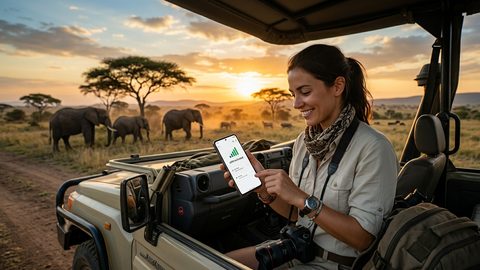 Whether an eSIM Is Worth It for Safari and Long-Haul Travellers
Is an eSIM worth it for safari or long-haul travel? A candid look at real costs, coverage gaps, and what actually works in remote destinations.
Whether an eSIM Is Worth It for Safari and Long-Haul Travellers
Is an eSIM worth it for safari or long-haul travel? A candid look at real costs, coverage gaps, and what actually works in remote destinations.