Whether an eSIM Is Worth It for Safari and Long-Haul Travellers
Is an eSIM worth it for safari or long-haul travel? A candid look at real costs, coverage gaps, and what actually works in remote destinations.
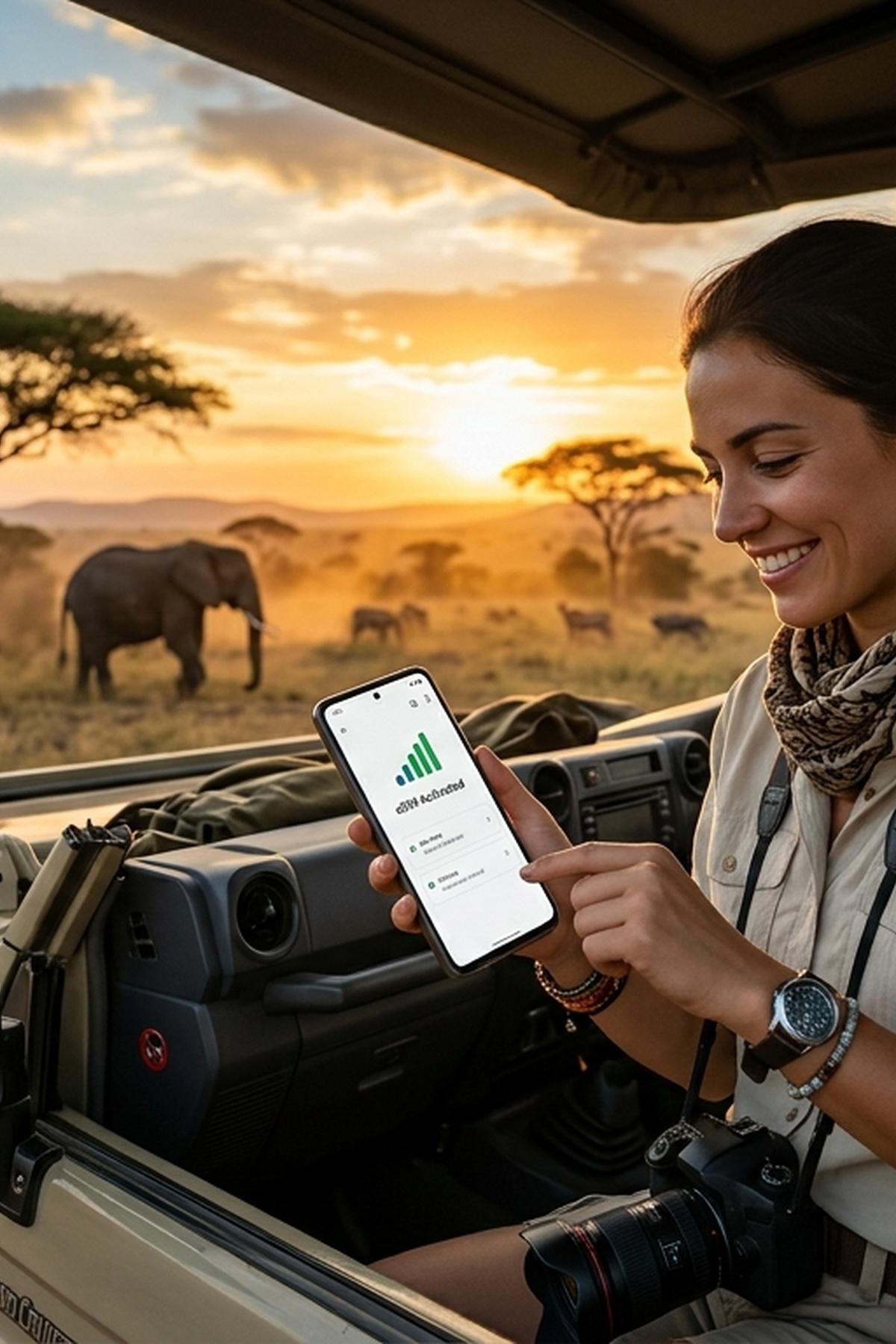
Your phone bill arrives after a Botswana safari. You open it. You immediately wish you hadn't. Standard international roaming on a British or Australian network can charge anywhere from £6 to £15 per day, and that assumes you're lucky enough to find coverage at all deep in the Okavango Delta. The question of whether an eSIM genuinely fixes this is worth asking seriously, because the answer is not the clean yes that most eSIM providers would have you believe. It depends significantly on where you're going, how you travel, and what you're actually expecting the technology to do.
The Short Answer
- eSIMs reliably beat standard roaming on multi-country trips where you cross borders frequently.
- In genuinely remote safari terrain, both eSIMs and roaming face the same ceiling: no tower means no signal, regardless of SIM format.
- The savings are real, but only if you choose a plan that explicitly covers your specific countries and suits your actual data habits.
The Real Cost of Roaming in Remote Destinations
Standard roaming has improved within the EU. Outside those agreements, the economics shift fast. A UK traveller on a typical big-four network can expect to pay a daily roaming add-on of roughly £5 to £15 in Kenya, Tanzania, or the Seychelles. That compounds over a fortnight. A 14-night Tanzania circuit can cost £70 to £210 in roaming charges alone, often for a modest data allowance that barely covers navigation and messaging.
Regional eSIM data plans tell a different story. A 10 GB Africa-region eSIM from a competitive provider typically runs between £15 and £35 for 30 days of access. For a two-week trip involving any meaningful data use, the eSIM wins on cost in most scenarios. But cost is only part of the picture. Coverage is where things get complicated, and where marketing language tends to outpace reality.
Roaming vs. eSIM: Indicative Costs Across Common Long-Haul Routes
| Route (14 nights) | Standard Roaming (est.) | Regional eSIM Plan (est.) | Potential Saving |
|---|---|---|---|
| Tanzania (Serengeti + Zanzibar) | £70, £140 | £18, £30 | £40, £110 |
| Kenya + Rwanda (gorilla + safari combo) | £90, £180 | £20, £35 | £55, £145 |
| Maldives (single outer-atoll resort) | £60, £120 | £12, £25 | £35, £95 |
| Thailand + Vietnam + Cambodia | £80, £160 | £15, £28 | £50, £130 |
These figures are indicative, drawn from publicly listed carrier and eSIM provider rates. Your actual saving depends on your home network's pricing, the specific countries visited, and daily data consumption.
How eSIMs Actually Work When You're Far from a City
An eSIM is a digital SIM embedded in your device. Rather than inserting a physical card, you scan a QR code or enter an activation code to load a carrier profile. Your phone then treats it like any other SIM, connecting to whichever local towers the eSIM provider has roaming agreements with. The GSMA, the international body that sets eSIM standards across the industry, describes this as a shift toward software-defined connectivity. In practical terms, it means you can hold your home SIM active for calls and texts while the eSIM handles data separately, with no physical card swap required.
That flexibility is genuinely useful on a complex itinerary. Flying London to Nairobi, then Kigali, then Cape Town over three weeks? A single regional African eSIM plan can cover all of those legs. No hunting for local SIM cards at airport kiosks. No fumbling with a pin ejector at a game reserve. No risk of losing a tiny card in transit.
Where eSIMs Genuinely Outperform the Alternatives
The strongest argument for an eSIM is convenience on multi-stop, multi-country itineraries. These are the scenarios where they consistently deliver:
- Crossing several borders on a single trip, particularly in East or Southern Africa where network quality varies sharply by country
- Short layovers in transit countries where sourcing a local SIM is impractical within the available window
- Island-hopping itineraries across the Indian Ocean or Southeast Asia, where each jurisdiction has its own network arrangements
- Travellers who need a reliable data backup when lodge Wi-Fi is slow, shared, or simply absent
- Any itinerary where you're moving frequently enough that reconfiguring your phone every few days becomes a genuine inconvenience
The Indian Ocean is a particularly clear example. A trip combining Mauritius, Réunion, and the Seychelles across three weeks involves three separate telecommunications environments. A regional eSIM removes the need to research and source a different SIM in each territory, and it eliminates the risk of arriving in Réunion without a working data connection.
The Coverage Gap That Most Promotional Content Skips Over
Here is the part that tends to disappear in eSIM marketing: the signal ceiling.
An eSIM connects to the same physical towers as any other SIM. If you're at a remote tented camp in the Serengeti or a fly-in lodge on the edge of the South Luangwa Valley, and there is no tower within viable range, an eSIM produces no signal. The limitation is infrastructure, not SIM format. This is not a minor caveat. It is the central fact that determines whether an eSIM is relevant to your specific trip at all.
Many high-end safari camps operate in areas with no cellular coverage by design, often as a selling point. In those cases, the lodge's satellite internet link is your only connection to the outside world, and both roaming and eSIM data plans deliver the same result when you're in the bush: nothing useful.
Coverage maps published by eSIM providers are worth checking, but they are usually national rather than regional in granularity. "Covered in Tanzania" does not mean "covered in the Ngorongoro Conservation Area at camp elevation." The honest approach is to ask your safari operator directly what connectivity looks like at the specific camps on your itinerary. They know, and they'll tell you plainly.
Vetting eSIM Plans Before You Leave Home
Not all eSIM providers are equal. Some resell access to weaker local partner networks. Others hold strong roaming agreements with the dominant in-country carriers. Before committing to a plan, work through these steps in order:
- Confirm your handset supports eSIM. Most flagship devices since 2018 do, but budget and older mid-range phones often don't, and some carrier-locked devices have eSIM disabled.
- Map every country on your itinerary and verify the plan explicitly covers each one, not just the broader geographic region.
- Identify which local carrier the eSIM provider partners with in each country. The dominant local carrier typically holds the widest rural coverage footprint.
- Check speed terms. Some cheaper plans throttle to 3G after a data threshold, which matters for navigation, photo uploads, or video calls.
- Check the validity window carefully. A 30-day plan that activates on first use is wasted if you activate it two weeks before departure.
Dedicated comparisons of best eSIM providers aggregate plan terms, network partners, and destination-level coverage in one place, which saves considerable research time against visiting a dozen individual provider sites. Use that kind of resource as a shortlisting tool, then verify the specific country coverage yourself before purchasing.
The Maldives and Outer Atolls: A Specific Case Worth Examining
The Maldives presents a connectivity puzzle that doesn't fit neatly into standard eSIM advice. Resorts on the central atolls near Malé tend to have reasonable 4G coverage through Dhiraagu or Ooredoo, the country's two main carriers. Luxury resorts also typically provide their own Wi-Fi, though quality and bandwidth vary considerably by property.
Outer atoll properties are a different calculation. Seaplane transfers to remote islands place guests in locations where cellular coverage ranges from patchy to absent. An eSIM covering the Maldives will connect to one of those two carriers, but coverage on any given island requires specific confirmation. Resort staff are the most reliable source for this. Ask them directly, not the eSIM provider's support team, which will typically confirm national coverage but cannot speak to specific atolls.
Managing Data Consumption in the Field
Even with a sound eSIM plan in place, data discipline matters in remote destinations. A few things consistently catch travellers off guard:
- Cloud photo backups and automatic app updates will drain a data allowance overnight if not disabled before departure
- Offline maps downloaded in advance via Google Maps or Maps.me eliminate the need to stream map data while moving between locations
- Video calls are heavy consumers; assess whether lodge Wi-Fi is sufficient for those before burning eSIM data on them
- Roaming partner networks sometimes deliver slower real-world speeds than the eSIM provider advertises, particularly in rural and semi-rural areas
A 5 GB plan handles messaging, email, and moderate browsing comfortably for two weeks if automatic syncing is turned off. Travellers planning regular photo uploads or social content should budget 10 GB or more. Over-provision slightly rather than running out mid-itinerary; unused data is a minor loss, but a dead eSIM plan in transit between countries is a genuine inconvenience.
The Verdict That Actually Reflects How These Trips Work
For a traveller crossing multiple countries on a single itinerary, an eSIM is almost certainly worth the setup effort. The cost savings against standard roaming are meaningful, the convenience of pre-loading a plan before departure is real, and the ability to keep a home SIM active for calls provides a sensible fallback. The friction of switching is low on any modern unlocked handset.
For a traveller heading to a single remote camp with no cellular infrastructure, the eSIM question is largely beside the point. The bottleneck is physical tower coverage, and no SIM format overrides that constraint. In that scenario, the lodge's satellite connection is the primary option, and an eSIM functions at best as a useful supplement on transit days through cities at either end of the trip.
The majority of long-haul itineraries sit in the middle ground, and that is where eSIMs prove their value most clearly. A three-week trip that begins in Nairobi, moves through the Masai Mara, continues to Zanzibar, and ends in Cape Town involves multiple carriers, multiple coverage environments, and meaningful potential roaming costs. A well-matched regional eSIM plan handles all of it for a fraction of what standard roaming would charge.
The research step matters more than the technology. A plan with poor network partners in the countries you're actually visiting is worse than no plan at all. Spend an hour comparing terms before you travel. The eSIM earns its keep well before you clear customs, and the financial case stacks up honestly once you look at the numbers rather than the marketing copy.
Read next
-
 Turkey in 2025 — Whether the Cost, Crowds and Safety Trade-offs Are Worth It
Turkey in 2025 offers genuine appeal but demands honest planning. A candid breakdown of costs, seasonal crowds, safety realities and who should actually commit.
Turkey in 2025 — Whether the Cost, Crowds and Safety Trade-offs Are Worth It
Turkey in 2025 offers genuine appeal but demands honest planning. A candid breakdown of costs, seasonal crowds, safety realities and who should actually commit.
-
 Why the Journey to Your Safari Camp Deserves as Much Planning as the Stay
Getting to a remote safari camp is harder than most travellers expect. Plan multi-leg itineraries, bush plane connections, and transfer windows carefully.
Why the Journey to Your Safari Camp Deserves as Much Planning as the Stay
Getting to a remote safari camp is harder than most travellers expect. Plan multi-leg itineraries, bush plane connections, and transfer windows carefully.