Marrakesh Hotels and Riads: What the Upgrade Genuinely Buys You
Marrakesh hotels and riads range from unheated courtyard dars to Hivernage five-stars. Here is what the extra dirhams actually buy you beyond the photographs.
Marrakesh Hotels and Riads: What the Upgrade Genuinely Buys You
You are standing on a Kasbah rooftop at 5:17 AM when the first call to prayer cuts through the pre-dawn silence at 80 decibels. The minaret is three houses away. Below you, a ground-floor room has been unheated all night, and the January air sits at 4°C. This is not a design flaw. This is the trade-off you are paying to avoid or to accept. The decision between budget dars, mid-range riads, and five-star Hivernage hotels is not about prettier tiles. It is about hot water that stays hot, a pool you can actually swim in, and a front door your taxi can reach. Understanding what Marrakesh hotels and riads deliver at each price tier is the difference between a trip you remember and a trip you survive.
What the Entry-Level Dar Actually Delivers
Space and Light: What the Photos Hide
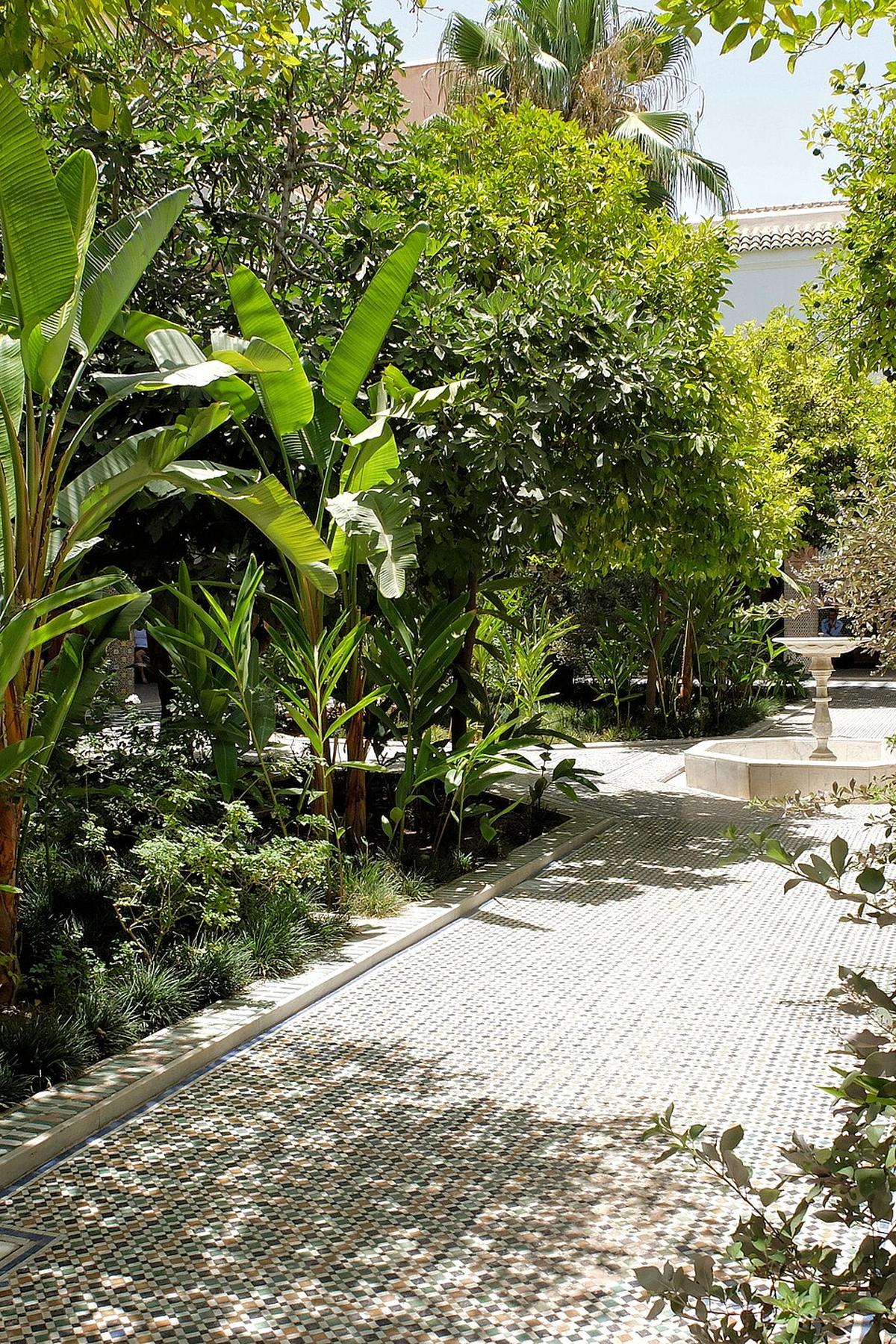
A dar is a guesthouse without a central open space. In the cheapest tier, your room opens onto a narrow interior hall, not the open air. The staircase is winding, often without a handrail, and there is no elevator in 95% of riads, let alone dars. Your plunge pool, if the listing shows one at all, is unheated and measures 2 by 3 metres. In November through March, the water sits at ambient temperature. You will not use it. The courtyard photo you saw on the booking site was taken at peak daylight. In reality, most riad interiors get two to three hours of direct sun. The rest of the day they are dim. The wide-angle lens made the space appear 30 to 50 percent larger than it is. The rooftop shot cropped out the satellite dishes, water tanks, and the neighbouring riad's laundry.
Breakfast, Hot Water, and Street Noise
Breakfast is included in 90% of riad rates: msemen, baghrir, bread, butter, jam, honey, olives, fresh orange juice, mint tea, and yogurt. Eggs are available on request at most places. But the hot water in your shower arrives at a variable temperature. On a cold morning you may be adjusting the tap for five minutes before it settles. The motorbike noise from the street is inaudible in the still photos. In reality, riders speed through 1-metre-wide alleys without warning. Sound carries straight into ground-floor rooms facing the lane.
Why the Mid-Range Riad is the Real Upgrade
Moving from a budget dar to a mid-range riad in Mouassine or the Kasbah changes the fundamentals. The interior now has a working fountain, the plunge pool is heated, and the hot water arrives at a consistent temperature. The entrance is car-accessible. The driver drops you at the door instead of dragging wheeled suitcases through 15 minutes of unpaved, unsigned alleys at night while children offer help for money. In Mouassine, the lanes are quieter. In the Kasbah, the residential feel means less souk noise and fewer touts. The rooftop terrace is above the third or fourth floor, and while the 5 AM call to prayer is still audible, the distance from the minaret determines the in-riad volume. Interior-facing rooms in top-quartile riads run MAD 1,200 to 2,000 per night in the source material; check the current price before booking. That rate includes breakfast and, at most properties, a private hammam slot.
The Hammam and the Plunge Pool Reality
The hammam treatment, scrub with a kessa glove and savon beldi, costs MAD 150 to 350 for 30 minutes in the source material; check the current price before booking. The steam room operates at 40 to 48 degrees Celsius with near-100 percent humidity. Visibility drops to under a metre when the room is in use. The plunge pool, photographed to look like a swimming pool, remains a cooling dip rather than a swim. Fewer than five riads in the entire medina have a full-length pool of 15 metres or longer. If you want laps, you need a Palmeraie or Hivernage hotel.
| Category | Entry-Level Rate (2025) | Pool | Heat | Noise | Access |
|---|---|---|---|---|---|
| Budget Dar | MAD 300-600 | Unheated plunge pool, 2x3 m | Unreliable hot water, no heating in rooms | Motorbike and souk noise at street level | 15-min unpaved alley walk from car drop-off |
| Mid-Range Riad (Mouassine/Kasbah) | MAD 1,200-2,000 | Heated plunge pool, 4x5 m | Reliable hot water, some rooms heated | Moderate; call to prayer audible but distance buffers it | Car-accessible entrance, porter available |
| Luxury Hotel (Hivernage) | MAD 2,500-5,500 | Full-length heated pool, 15 m+ | Central heating and air conditioning | Zero medina noise; wide boulevards | Driveway, parking, elevator access |
| Palace (La Mamounia/Royal Mansour) | MAD 5,500-12,000+ | Multiple heated pools, private hammam | Full climate control, butler service | Soundproofed, private gardens | Valet parking, private entrance, golf cart transfer |
Marrakesh Luxury Hotels: What the Five-Star Rate Actually Covers
In Hivernage, the boulevards are wide, the streets are paved, and no one offers to guide you to the square for a fee. The five-star hotels here charge what they do because they solve every problem the medina creates. The pool is heated and swimmable year-round. The air conditioning works against the July heat when temperatures hit 40 to 45 degrees Celsius. The winter heating keeps the room comfortable in January. The breakfast is charged separately at most hotels, costing MAD 80 to 180 per person in the source material; verify the current price before booking, and it arrives on a tray with a pot of coffee that stays hot. A glass of wine costs MAD 120 to 180 in the source material; check the current price before booking. Most riads do not serve alcohol at all. The entry-level room at La Mamounia runs MAD 5,500 to 7,000 per night in the source material; check the current rack rate before booking. At Royal Mansour, a riad-villa starts at MAD 12,000 per night and includes a private hammam and butler service. The privacy you get at that level is not replicable in a standard riad.
The Trade-Off You Make
The trade-off is that you lose the medina immersion. You cannot step out of La Mamounia and be inside the Souk Semmarine noise within thirty seconds. Take a petit taxi or walk ten minutes to the medina edge. The decision is whether you want to escape the full-sensory assault of exhaust fumes, touts, and relentless haggling, or whether you want to wake up inside it.
Best Riads Marrakesh: Where to Find the Real Ones
The best riads in Marrakesh are not on the central Souk Semmarine strip. That corridor is the tourist retail core, where maximum sensory overload meets minimum respite. The motorbike noise is constant, the fake guides are thick, and the shopkeepers will aggressively demand payment if you photograph their goods without permission. The best riads cluster in three zones. In Medina North around Mouassine, the lanes are quieter and the upscale concept stores have replaced the T-shirt stalls. The Saadian Tombs area in the Kasbah offers a less frenetic residential feel, with the Mellah spice market and the tanneries within walking distance. In the Palmeraie, the riads become private villas with full-length pools, but they require a car.
The Pool Photograph Trick
No riad in the medina has a full-length pool. If the listing calls its pool a swimming pool, look at the dimensions. A 4-by-5-metre plunge pool is for cooling dips, not laps. The published photographs conceal this: the wide-angle lens makes it look Olympian. The rooftop shots omit the adjacent rooftops, water tanks, and satellite dishes. The interior photos are lit for midday. In reality, the ground level is dim for most of the day.
Marrakesh Boutique Accommodation: the Sweet Spot
Boutique accommodation in Marrakesh sits between the budget dar and the palace hotel. These are properties with six to ten rooms, a central garden with a fountain, and a rooftop terrace with a view of the Koutoubia minaret. The rate covers breakfast, a hammam session in the source material; verify the current price before booking of MAD 150 to 350, and an airport transfer arranged by the riad for MAD 150 to 250 per car. The riad-arranged car cannot enter the medina. The driver drops you at the nearest accessible gate, and a porter with a handcart meets you for the luggage. The porter expects a tip of MAD 50 to 100 at 2025 norms. The airport transfer cost via petit taxi from the airport rank runs MAD 70 to 150, but drivers at Jemaa el-Fna and the airport routinely quote three to five times the metered fare. Walk two blocks away from the rank before hailing. The RAK airport bus No. 19 runs to Jemaa el-Fna for 30 MAD and takes 25 to 40 minutes.
Stairs, Noise, and Which Room to Book
In the medina, the staircase in these boutique properties is still narrow and winding. There is no elevator. The upper-floor rooms open onto an interior gallery walkway overlooking the central space, and the rooftop terrace is accessible only by stairs. The call to prayer from the nearest mosque is audible from the rooftop and upper-floor rooms. The first call comes around 5:00 AM depending on the season. If you are a light sleeper, book a room on the far side from the minaret and bring earplugs. The motorbike noise is absent from still photos, but it is real. In the Souk Semmarine area, it is relentless. In the Kasbah, it is tolerable. In Mouassine, it is occasional.


The Practical Frictions No Booking Photo Shows
Most medina businesses, small restaurants, and taxis are cash-only. ATMs run dry on weekends and public holidays. Carry enough MAD for two days of food, tips, and transport. Do not rely on being able to withdraw in the medina. The fake guides are not subtle. A man offering this way to the square will lead you in circles and then demand 100 to 200 MAD for the tour. Ignore touts offering help at the taxi rank at the airport. Google Maps walking directions fail inside the medina's covered lanes, where the GPS signal drops and alleys dead-end without warning. Download an offline map of Marrakesh before you arrive. Buy a Maroc Telecom SIM at the airport booth, not from a medina reseller who sells unregistered cards that deactivate after 48 hours. The 4G works reliably even inside riads, but the medina GPS is patchy.
When to Book and What to Budget
Timing Your Trip
Peak season runs November and March through April, when daytime temperatures sit at 22 to 28 degrees Celsius, nights are cool, and skies are clear. Christmas and Easter holidays spike prices and crowd the medina. Avoid July and August. Temperatures routinely hit 40 to 45 degrees Celsius, making midday exploration dangerous. Also avoid the last 10 days of Ramadan if you want daytime food and normal business hours.
Minimum Stay and Daily Costs
The minimum stay for Marrakesh is three full days: one for the souks and Jemaa el-Fna, one for the monuments and gardens, one for a day trip or hammam recovery. If you stay in a mid-range riad at MAD 1,200 to 2,000 per night, budget an additional MAD 300 per day for food, MAD 150 for a hammam session, and MAD 20 for a grand taxi to the bus station for a day trip to Ourika Valley or Essaouira.
Riad vs Hotel Marrakesh: the Decision Framework
If you are mobility-impaired, do not book a riad. The medina lanes are narrow, unpaved, and choked with motorbikes. No riad has an elevator. If you are a solo female traveller with a high tolerance for street attention, a mid-range riad in Mouassine or the Kasbah works. If persistent haggling and catcalling drain you, book a Hivernage hotel and take taxis to the medina for daytime visits. If you want a quiet, all-inclusive resort escape, Marrakesh is not the city for you. If you are a culture obsessive who wants to document every carved doorway, a riad puts you inside the architecture.
What the Upgrade Buys, and What It Doesn't
The upgrade buys you a heated pool instead of an unheated one, reliable hot water instead of a guessing game, and a car-accessible entrance instead of a dark alley walk. It does not buy you silence, a full-length lap pool, or a guaranteed late check-in. Riad staff often leave by 22:00. A late arrival requires advance confirmation. Most riads require cash for extras like hammam treatments, drinks, and tips. Some accept card for the room bill only. Verify with the operator before you arrive.
Common Questions
Is a riad or a hotel better for a first-time visitor to Marrakesh?
A mid-range riad in Mouassine or the Kasbah. You get medina immersion, a heated plunge pool, reliable hot water, and a car-accessible entrance. A Hivernage hotel is better if you find touts and motorbike noise exhausting. Know your tolerance before you book.
Do riads have air conditioning and winter heating?
Mid-range and luxury riads have air conditioning. Winter heating is less reliable. Budget dars often have none. Interior rooms get cold November through March. Verify with the operator and book a room with a space heater if visiting in winter.
Can I swim in a riad plunge pool?
No. A plunge pool is 2 by 3 metres to 4 by 5 metres, depth 1.2 to 1.5 metres. It is for cooling dips. Fewer than five riads in the medina have a full-length pool. If you want to swim, book a Palmeraie or Hivernage hotel.
How much should I tip the porter at the medina gate?
MAD 50 to 100 at 2025 norms. The porter meets you with a handcart at the car-accessible gate, carries luggage through the alleys to the riad, and does not set a price. Have cash ready in small bills.
Read next
-
 Where to Stay in Marrakesh Medina, Hivernage or the Palmeraie
Where to stay in Marrakesh comes down to one question: how much medina chaos can you genuinely tolerate? Here is what each district actually delivers.
Where to Stay in Marrakesh Medina, Hivernage or the Palmeraie
Where to stay in Marrakesh comes down to one question: how much medina chaos can you genuinely tolerate? Here is what each district actually delivers.
-
 Marrakesh Things to Do Worth the Queue and What I Would Skip
Marrakesh things to do range from the genuinely magnificent to the queue-filled letdown. Here is where to spend your time and what to skip without guilt.
Marrakesh Things to Do Worth the Queue and What I Would Skip
Marrakesh things to do range from the genuinely magnificent to the queue-filled letdown. Here is where to spend your time and what to skip without guilt.
-
 Getting Around Marrakesh When the Taxi Cannot Reach Your Riad
Getting around Marrakesh means mastering petit taxis with broken meters, medina lanes where Google Maps fails, and the No. 19 airport bus that everyone overlooks.
Getting Around Marrakesh When the Taxi Cannot Reach Your Riad
Getting around Marrakesh means mastering petit taxis with broken meters, medina lanes where Google Maps fails, and the No. 19 airport bus that everyone overlooks.
-
 Marrakech glamping and when the tent is actually worth the price
When Marrakech glamping is a genuine desert night with fire and silence, and when it is just an expensive tent with a photo opportunity.
Marrakech glamping and when the tent is actually worth the price
When Marrakech glamping is a genuine desert night with fire and silence, and when it is just an expensive tent with a photo opportunity.
-
 Talking to Marrakech Travel Writers About What They Do Differently
Marrakech travel writers explain how they vet medina fixers, talk to riad owners off-record, and why they refuse free hammam treatments.
Talking to Marrakech Travel Writers About What They Do Differently
Marrakech travel writers explain how they vet medina fixers, talk to riad owners off-record, and why they refuse free hammam treatments.
-
 How to Read a Marrakech Destination Guide Without Getting Burnt
Marrakech destination guides carry specific biases in their medina maps, riad listings, and restaurant picks. Learn to read them critically.
How to Read a Marrakech Destination Guide Without Getting Burnt
Marrakech destination guides carry specific biases in their medina maps, riad listings, and restaurant picks. Learn to read them critically.
-
 Marrakech Hotels With Resident Animals and What That Actually Means
Some Marrakech hotels keep peacocks, tortoises, and camels. Here is how to separate genuine animal care from a lobby photo opportunity.
Marrakech Hotels With Resident Animals and What That Actually Means
Some Marrakech hotels keep peacocks, tortoises, and camels. Here is how to separate genuine animal care from a lobby photo opportunity.
-
 Turkey in 2025 — Whether the Cost, Crowds and Safety Trade-offs Are Worth It
Turkey in 2025 offers genuine appeal but demands honest planning. A candid breakdown of costs, seasonal crowds, safety realities and who should actually commit.
Turkey in 2025 — Whether the Cost, Crowds and Safety Trade-offs Are Worth It
Turkey in 2025 offers genuine appeal but demands honest planning. A candid breakdown of costs, seasonal crowds, safety realities and who should actually commit.
-
 Why the Journey to Your Safari Camp Deserves as Much Planning as the Stay
Getting to a remote safari camp is harder than most travellers expect. Plan multi-leg itineraries, bush plane connections, and transfer windows carefully.
Why the Journey to Your Safari Camp Deserves as Much Planning as the Stay
Getting to a remote safari camp is harder than most travellers expect. Plan multi-leg itineraries, bush plane connections, and transfer windows carefully.