Turkey in 2025 — Whether the Cost, Crowds and Safety Trade-offs Are Worth It
Turkey in 2025 offers genuine appeal but demands honest planning. A candid breakdown of costs, seasonal crowds, safety realities and who should actually commit.
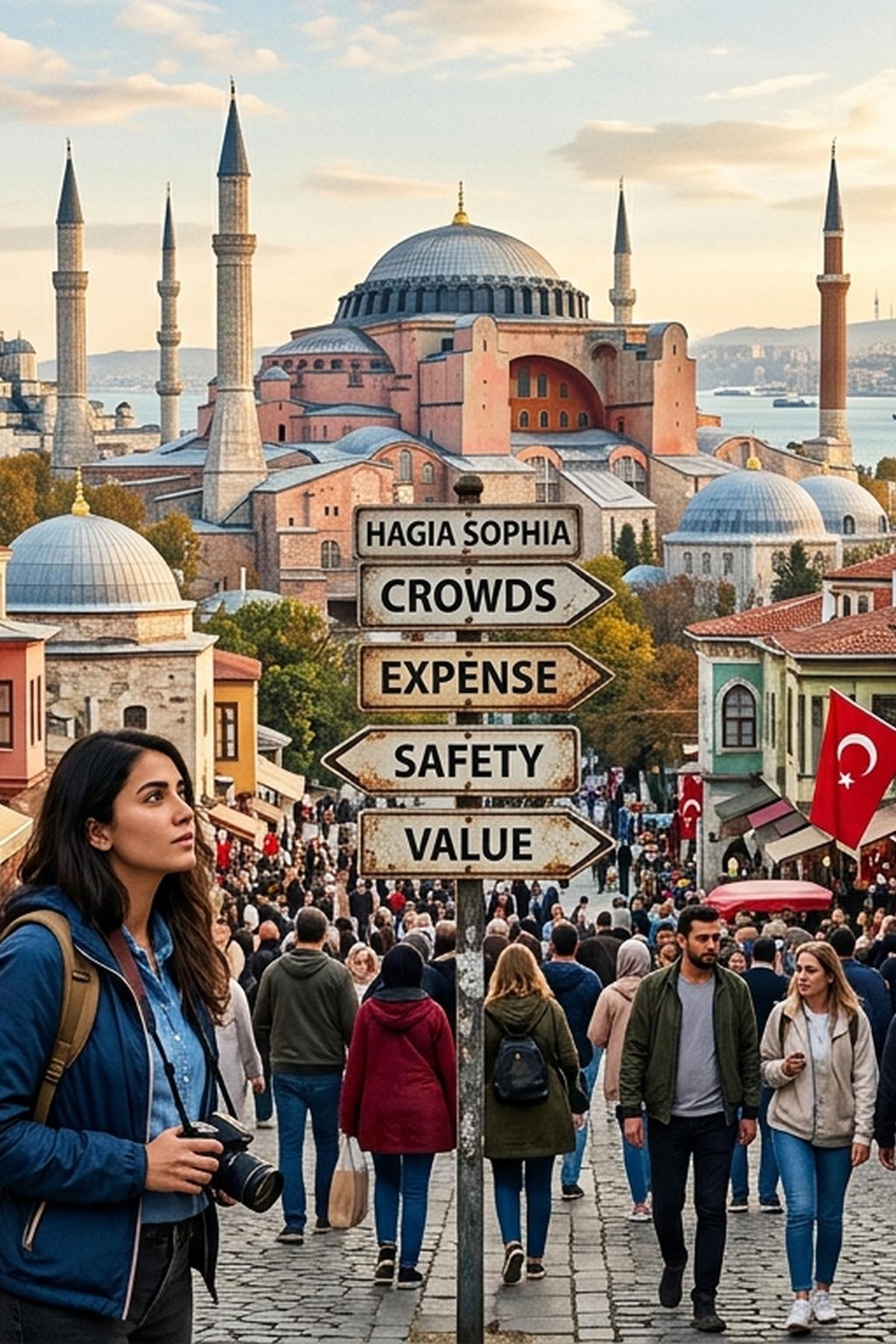
Turkey keeps appearing on shortlists for a reason. The archaeology is world-class, the food holds up across most price points, and the scenery across three very different regions earns its reputation without requiring any photographic generosity. But experienced travellers know that "worth it" is a more complicated calculation than the highlight reel suggests. Inflation, mass tourism, a genuinely complex safety picture, and a hotel market that has largely decoupled from the weak lira all have to enter the equation before you commit to a long-haul trip.
The Honest Assessment
Turkey rewards travellers who plan precisely, travel outside peak summer and choose their region deliberately. Istanbul and Cappadocia have largely repriced into hard currency, so the lira's collapse offers less relief than the exchange rate implies. The Aegean coast still holds pockets of genuine value. Safety concerns are real in specific zones but routinely overstated for the standard tourist corridor. Turkey is worth the commitment, but only for the right kind of traveller going at the right time.
The Lira Illusion: Why Turkey Is Not as Cheap as the Exchange Rate Implies
The Turkish lira has lost the vast majority of its value against the pound over the past five years. The instinct is to treat Turkey as extraordinary value as a result. In practice, the accommodation and experience economy targeting foreign visitors priced itself in hard currency long ago. Hotels in Sultanahmet quote in US dollars. Cave suites in Goreme advertise in euros. Hot air balloon operators in Cappadocia, charging between £130 and £200 per person for a one-hour flight, work in hard currency too, and have done for years.
Local food markets, street food, municipal transport and independent restaurants away from tourist centres still feel genuinely affordable. A meal at a lokanta away from the tourist trail might cost £4 to £7 per person in Istanbul. Intercity bus travel is cheap by any standard. But the moment you step into the curated visitor economy that most travellers actually engage with, the lira advantage quietly fades. Turkey is not cheap for a European-standard trip of reasonable quality. It is moderately priced, and that is a meaningful distinction when you are weighing it against Portugal, Georgia or the Balkans.
Timing Strategy: How the Calendar Changes Everything
Visiting Turkey in July or August carries consequences that most travel content glosses over. Istanbul in peak summer reaches 34 to 38 degrees with significant humidity, making the sustained walking that defines any worthwhile itinerary genuinely unpleasant. Cappadocia, at higher altitude, is more manageable temperature-wise, but its peak balloon season draws crowds that alter the character of the experience considerably. The Aegean resorts become package-holiday territory in August, with Bodrum and Marmaris operating at a register that has little to do with considered travel.
May to mid-June is the best window across most of Turkey. Temperatures are comfortable everywhere, balloon flights in Cappadocia run reliably, Istanbul's major sites are busy but not suffocating, and shoulder-season pricing at independent hotels is noticeably kinder. September and October replicate that pattern once the peak-summer crowd disperses. April works well in Istanbul and along the Aegean coast, but Cappadocia can still be cold and wind-prone, with balloon flights cancelled for days at a time. Build any Cappadocia itinerary with flexible cancellation in mind rather than banking on specific launch windows.
Istanbul Accommodation: What Each Tier Actually Delivers
Istanbul has a wide accommodation spread, but the tiers behave differently here than in most European capitals. A mid-range boutique in Beyoglu or Karakoy typically runs between £90 and £160 per night. At that level, you generally get a well-designed room, a reasonable breakfast, and a location that places you within walking distance of Istiklal Avenue, the Golden Horn and Galata. The quality at this tier is often genuinely good, with some family-run properties delivering a level of personal service that outperforms their price point considerably.
Pushing into the £200 to £350 range buys rooftop pools with Bosphorus views, more consistent service throughout a stay, and the reliable execution that matters when Istanbul is one stop in a multi-city itinerary and you need a hotel to function as a soft landing. The true luxury tier, anchored by addresses like the Four Seasons Sultanahmet and the Shangri-La Bosphorus, begins above £400 per night. The settings at this level are genuinely exceptional. Whether the premium over a strong mid-range option justifies itself depends almost entirely on how much time you plan to spend inside the hotel rather than out in the city, which is where Istanbul's real value lives.
Cappadocia: Where the Landscape Justifies the Price and the Crowds Test Your Patience
Cappadocia earns its reputation without needing inflated expectations. The fairy chimneys, the valleys, the scale of the volcanic terrain as you move through it on foot or by ATV are as striking in person as the photographs suggest. The balloon flights, for all that they have been absorbed into the content-creation economy, remain a legitimately memorable experience if you choose a reputable operator and accept that sunrise over Goreme fills the sky with dozens of other baskets simultaneously.
Accommodation here operates on its own logic. The best cave hotels, properties like Argos in Cappadocia and the Museum Hotel in Uchisar, are priced as boutique luxury with two or three-night minimums in peak season, often running between £280 and £550 per night. Mid-range options at £120 to £200 can be very good, particularly if you prioritise a terrace with a valley view over in-room extras. Budget options below £80 generally mean basic rooms with no view and shared facilities of variable quality. Two nights is enough to see Cappadocia properly. Three is comfortable. Much beyond that becomes repetitive unless your itinerary specifically covers all the walking valleys in depth.
Accommodation Pricing Across Cappadocia and the Aegean Coast
| Region | Budget Per Night | Mid-Range Per Night | Upper Tier Per Night | What More Money Buys |
|---|---|---|---|---|
| Cappadocia (Goreme/Uchisar) | £45 to £80 | £120 to £200 | £280 to £550 | Carved cave rooms, valley views, private terraces, balloon-watching from bed |
| Bodrum (Aegean coast) | £50 to £90 | £130 to £220 | £350 to £900+ | Private beach access, butler service, design-forward resort properties |
| Kas and Fethiye (Lycian coast) | £35 to £65 | £90 to £160 | £200 to £380 | Quieter bays, better restaurant proximity, more genuine local character |
The Aegean Coast: Bodrum and Kas Are Not the Same Trip
The Aegean coast is not a single destination. Bodrum has positioned itself firmly as a playground for affluent Turkish families and an increasing number of European and Gulf visitors seeking a Mykonos-adjacent experience. Upper-tier prices in Bodrum now rival the Greek islands, the atmosphere in summer is extremely loud, and the town is most rewarding if marina culture and nightlife are part of what you came for. It is not a quiet or culturally rich destination, and should not be approached as one.
Kas, Fethiye, Oludeniz and the stretch along the Lycian coast are a very different proposition. The pace is slower, the landscape rewards walking over lying still, and the accommodation market has not fully repriced into hard currency territory. Kas in particular remains one of the more atmospheric small towns on the Turkish coast, with accessible diving, a decent restaurant scene and a scale that prevents it from feeling overwhelmed by visitor numbers. For travellers who want genuine scenery without full resort mode, the Lycian coast delivers more per pound than comparable stretches of the Amalfi Coast or Santorini, and without the same logistical friction.
The Safety Question: An Honest Regional Picture
Most travel articles on Turkey acknowledge safety concerns briefly and move on. That approach does not serve someone planning a real trip. The honest position is that Turkey's safety picture is geographically uneven, and the standard tourist itinerary runs through regions that carry relatively low risk by international standards.
Istanbul, Cappadocia and the Aegean coast have well-established visitor infrastructure and a stable security environment for tourists. Petty theft exists in tourist-dense areas, particularly around Sultanahmet and the Grand Bazaar, and the same vigilance you apply in Rome or Barcelona applies here. The southeast of Turkey is different. Areas near the Syrian border and parts of the region affected by the 2023 Kahramanmaras earthquake still carry elevated advisories for certain travel profiles. Reading current Turkey safety advice before finalising any itinerary is basic planning, not overcaution. For authoritative guidance updated to current conditions, official travel guidance from the UK government is reviewed regularly and worth consulting before any booking is confirmed.
The 2023 earthquake was devastating in the southeast and south-central regions, but its impact on Istanbul, Cappadocia and the Aegean coast was minimal from an infrastructure and access perspective. Turkey sits on active fault lines, which is worth acknowledging without treating it as a reason to avoid the country. Many of Europe's most-visited destinations carry comparable geological risk without the same hesitation from travellers.
Turkey's Actual Return on Investment: Who Should Go and Who Should Reconsider
Turkey makes the most sense for travellers who build a focused itinerary rather than attempting to cover too many regions in one trip. Istanbul combined with Cappadocia is a coherent pairing that most people can complete comfortably in eight to ten days. Adding the Aegean coast extends that to twelve to fourteen days and requires either a domestic flight or an overnight bus, both of which are practical options. Attempting to combine all three regions with Ephesus, the Black Sea and multiple coastal stops in ten days is how Turkey becomes exhausting rather than satisfying.
The destination rewards travellers who invest real time in researching accommodation, because the quality range at each price point is wide, and the gap between a considered booking and a careless one is significant. It also rewards those who eat away from the tourist trail, where food quality typically improves and cost simultaneously drops. Travellers who prefer simply arriving at a resort and being looked after may find Greece, Cyprus or Croatia better structured for that mode, with hospitality infrastructure more uniformly configured toward passive enjoyment.
Those working with limited time who want maximum predictability may find Turkey's occasional friction points, including language barriers outside tourist areas, variable card payment infrastructure and a bureaucratic character at some entry points, more wearing than they are worth compared to destinations closer to home. But for the research-oriented traveller who wants historical depth, distinct cultural texture and landscape variety that no single European alternative fully replicates, Turkey in 2025 makes a compelling case. The trade-offs are real. They are also manageable. And for the right kind of traveller, manageable trade-offs attached to a destination this layered are a reasonable bargain.
Read next
-
 Why the Journey to Your Safari Camp Deserves as Much Planning as the Stay
Getting to a remote safari camp is harder than most travellers expect. Plan multi-leg itineraries, bush plane connections, and transfer windows carefully.
Why the Journey to Your Safari Camp Deserves as Much Planning as the Stay
Getting to a remote safari camp is harder than most travellers expect. Plan multi-leg itineraries, bush plane connections, and transfer windows carefully.
-
 Whether an eSIM Is Worth It for Safari and Long-Haul Travellers
Is an eSIM worth it for safari or long-haul travel? A candid look at real costs, coverage gaps, and what actually works in remote destinations.
Whether an eSIM Is Worth It for Safari and Long-Haul Travellers
Is an eSIM worth it for safari or long-haul travel? A candid look at real costs, coverage gaps, and what actually works in remote destinations.