Eating in Marrakesh: Tables Worth Booking and Jemaa el-Fna Stalls That Are Theatre
Eating in Marrakesh means pit-roasted mechoui at lunch, tangia from furnace ashes, and Jemaa el-Fna stalls where the theatre sometimes outshines the food. Here is what to order.
Eating in Marrakesh: the Tables Worth Booking and the Jemaa El-Fna Stalls That Are Theatre
Eating in Marrakesh hits every traveller on day one: the medina is a sensory assault of touts, exhaust fumes, and a hundred food options that all look identical from the plastic stool. The question is not whether you will eat well here. It is which dirhams actually buy something you remember, and which buy a plate of theatre on a smoke filled square. Eating in this city means navigating a place where the most famous stalls on Jemaa el-Fna serve food that ranges from genuinely good to actively disappointing, and where the real treasures hide on a lunch only side street and a market lane outside the tourist zone. Organise your eating by dish, not by restaurant name. What you should eat is the fixed point. Where you eat it is negotiable.
Five Dishes You Must Eat in Marrakesh
The city has a canon. These five dishes are not a suggestion. They are the reason Marrakesh draws food focused travellers willing to eat standing at a counter or on a plastic stool in a cloud of charcoal smoke. Skip any of them and you missed the point.
Mechoui From Mechoui Alley, Lunch Only Until Sold Out
Mechoui is whole pit roasted lamb, chopped to order, served with cumin and salt on a sheet of bread. Go to Mechoui Alley, off Rue Kennaria in the Medina. Hours are 11:00 until sold out, which means 14:00 or 15:00. A portion costs MAD 60 to MAD 120 in 2025 depending on cut and weight. Eat it standing at a counter or on a shared bench. There is no decor, no menu, no negotiation. The lamb flavour and texture beat almost any tourist restaurant in the Medina. The downside: lunch only, no reservations, and arriving after 14:00 risks empty trays.
Tangia, Which Is Not a Tagine
Tourists confuse tangia with tagine constantly. A tangia is a clay pot of meat, slow cooked in the ashes of a communal furnace, traditionally made by men. The texture is falling apart tender. Tagine is a conical lid dish cooked on a stove. Tangia is this city's dish. Find it on Jemaa el-Fna stalls for MAD 40 to MAD 60 in 2025, and in a few neighbourhood grills. Quality varies enormously. The best version comes from stall 32, run by a man named Hasssan, consistently rated for its tangia.
Spleen Sandwich at Chez Hicham
Chez Hicham is a Jemaa el-Fna stall specialising in grilled lamb spleen served in bread with cumin. It is cheap, fast, and unapologetically offal. Dense. Mineral. Deeply savoury. This is not a dish for squeamish eaters. Order it if you want to understand what locals here actually eat after dark. A sandwich costs roughly MAD 15 to 25. The setting is plastic stools, noise, and smoke.
Pigeon Pastilla at Dar Yacout
Pigeon pastilla is the celebratory dish: a sweet savoury filo pie with powdered sugar and cinnamon crust, filled with spiced pigeon. Book Dar Yacout for it. This is not a street food experience. Dar Yacout is a riad style restaurant with a full dining room, and the pastilla arrives as part of a multi course meal. Expect to pay MAD 250 to 500 per person in 2025 for the three course set menu, excluding drinks. The setting is courtyard ambience. The trade off: famous riad dinners here often trade on the courtyard rather than kitchen execution. Dar Yacout's pastilla is genuinely good, but the price to food quality ratio falls short of the neighbourhood grills for day to day eating.
Harira at Stall 31
Stall 31 on Jemaa el-Fna is famed for its harira, the chickpea and lentil soup that Moroccans eat after sunset during Ramadan. It comes with chebakia sesame cookies on the side. A bowl costs roughly MAD 15 to 25 in 2025. The broth is peppery, filling, and a genuine achievement of simple cooking. This stall delivers both theatre and flavour. The downside: reliably available only in the evening, and during Ramadan the queue is long.
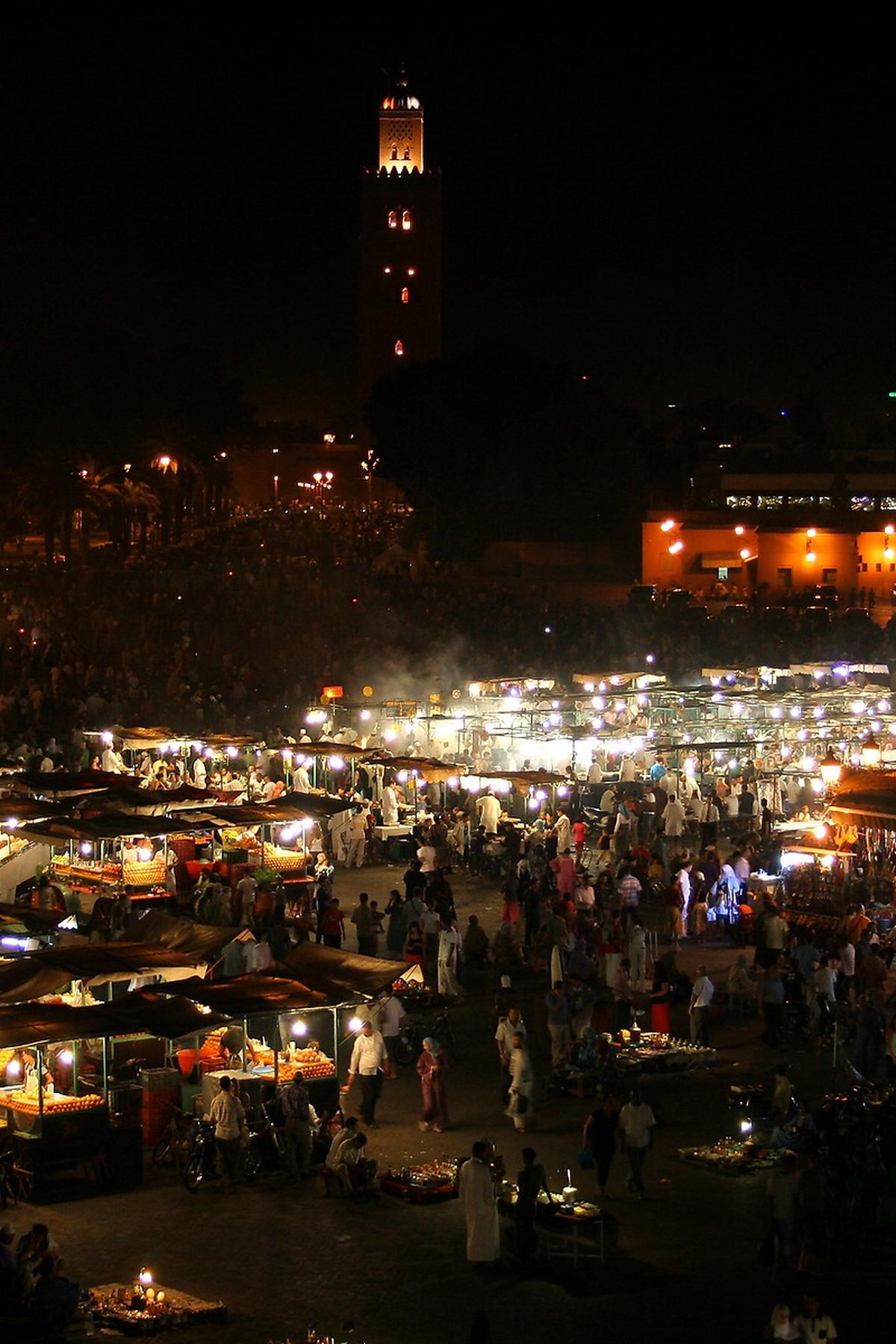

Marrakesh Street Food: Where the Real Eating Happens
Marrakesh street food does not mean eating from a cart in the tourist square. Go to the neighbourhoods where tourists are rare: Bab Doukkala market street, the Mellah spice market, and the lanes off Place des Ferblantiers. Snail soup, for example, is sold on Jemaa el-Fna for MAD 10 to 20 in 2025, but the better version comes from the steaming carts at Place des Ferblantiers. The broth is more herbaceous and locals outnumber the camera phones. Amlou, the argan oil, almond, and honey dip, is sold in the Mellah. It is distinct from generic nut butters and worth buying as a jar to take home. The hygiene situation at street stalls is managed by a municipal inspection system that posts grades at each stall, with 1 being the highest. Look for the grade before you sit down.
Marrakesh Restaurants Worth Booking: the Modern Moroccan Option
For a sit down meal that competes on technique rather than atmosphere, head to the modern restaurants in Gueliz and Hivernage. Dinner per person runs MAD 400 to 900 in 2025, food only, varying with tasting menu length and wine pairing. Reservation lead time for weekend tables at the top three names is 2 to 14 days. Same day bar seating is sometimes available if you are flexible. The value judgement: a three course riad dinner at MAD 500 often delivers less precision than a modern meal at MAD 600. The trade off is leaving the medina atmosphere behind. Air conditioning and designed interiors versus the chaos of the souk. That is the deal.
Jemaa El-Fna Food Stalls: Which Ones Deliver More Than Theatre
Jemaa el-Fna operates roughly 100 numbered stalls under a 2025 municipal licensing system. The first timer mistake: grabbing a seat at the nearest stall and ordering a mixed skewer plate for MAD 50 to 80. The food is often average. The price is inflated. The experience is mostly smoke and touts. Stall 1, run by Chez Rachid, is consistently rated for seafood. Stall 32, run by Hasssan, is the one for tangia. Stall 31 is the one for harira. The snail soup on the square is acceptable, but the version at Place des Ferblantiers is better. Fresh orange juice on the square costs MAD 4 to 10 depending on stall location. The juice is good. Hygiene varies. Look for the municipal grade posted at the stall. The honest assessment: Jemaa el-Fna is worth one meal for the experience. Direct repeat visits to Mechoui Alley for lunch or a neighbourhood grill in Bab Doukkala for dinner.
Moroccan Dishes Marrakesh Does Best: Beyond the Tourist Menu
The Moroccan dishes Marrakesh does best are not the ones on the laminated menu at the riad. Mechoui, tangia, spleen sandwich, pigeon pastilla, harira, snail soup, and amlou are the seven pillars. A few others deserve your attention. Salads at a modern restaurant can be excellent. Couscous is available everywhere but rarely the star. The supporting terms that show you know the city: Mechoui Alley, Chez Hicham, Dar Yacout, Bacha Coffee, Dar El Bacha, Place des Ferblantiers, Mellah, stall 31, Bab Doukkala. Use these as landmarks when you navigate. Bacha Coffee, inside Dar El Bacha, is worth the wait for the setting: a restored palace courtyard with exceptional coffee service. The queue can be 30 to 60 minutes. Go early, order the coffee with amlou on the side, and treat it as a mid morning break, not a meal.
Riad Dinners in Marrakesh: the Setting Versus the Food
Riad dinners are the default recommendation on every travel site. The price per person in 2025 is MAD 250 to 500 for three courses, excluding drinks. Most riads are unlicensed for alcohol. Alcohol is served only where the riad holds a liquor licence, or if you bring your own and the riad permits it. Reservation lead time for non guests is 24 to 72 hours. Same day reservations are possible for house guests. Food quality is variable. A three course riad dinner at MAD 500 often looks beautiful on the plate and tastes fine, but the precision of cooking and ingredient sourcing is usually lower than a modern restaurant at MAD 600. The courtyard ambience is the selling point. Book a riad dinner if you want an atmospheric evening with a fixed menu and no negotiation. If you want technically accomplished food, book a modern table in Gueliz and accept that you will eat in an air conditioned room.
.jpg)
Rooftop Terrace Dining in the Medina: Views Versus Value
Operational terraces in the Medina offering full dinner service run to several dozen as of a 2025 estimate. The price premium over a ground floor equivalent is 15 to 30 percent, varying with view proximity to the Koutoubia Mosque. Licensed terraces are concentrated in Hivernage and Gueliz. Medina terraces are mostly dry, with exceptions including Nomad, Le Salama, and Kabana. A 25cl local beer at a licensed terrace costs MAD 50 to 70 in 2025. A glass of wine runs MAD 80 to 140. An imported spirit with mixer costs MAD 120 to 180. Alcohol retail purchase is available at Carrefour and Marjane supermarkets, both closed during Ramadan daylight hours. Book a rooftop terrace once for the view of the Koutoubia minaret at sunset. The food is rarely the point. Eat a proper meal elsewhere and treat the terrace as a drinks and photo stop.
Tipping Customs in Marrakesh: What You Actually Owe
At restaurants, tip 5 to 10 percent on the bill when service is not included. For casual meals, MAD 10 to 20 is appropriate. At food stalls, tip MAD 5 to 10 per person. It is not obligatory but it is expected. At rooftop bars, tip 10 percent if a service charge is absent. Cash dependency in the city is real. Most medina businesses, small restaurants, and taxis are cash only. ATMs run dry on weekends and holidays. Withdraw enough before Friday evening and check your cash before you leave the hotel.
| Option | Price Per Person 2025 | Setting | Food Quality | Reservation Needed |
|---|---|---|---|---|
| Mechoui Alley | MAD 60-120 | Standing counter, no decor | Superior lamb, simple | No reservations, lunch only |
| Jemaa el-Fna stall (mixed skewers) | MAD 50-80 | Plastic stools, smoke, noise | Variable, average | No reservations, walk up |
| Stall 31 (harira) | MAD 15-25 | Plastic stools, smoke, noise | Genuinely good soup | No reservations, evening only |
| Dar Yacout (pigeon pastilla, 3 courses) | MAD 250-500 | Courtyard riad, atmospheric | Good, not exceptional | 24-72 hours for non guests |
| Modern Moroccan (Gueliz/Hivernage) | MAD 400-900 | Air conditioned, designed interior | High precision, seasonal | 2-14 days for weekend tables |
| Riad dinner (3 courses) | MAD 250-500 | Courtyard or salon, decorated | Variable, often average | 24-72 hours for non guests |
Practicalities: Getting Around, When to Go, What to Avoid
Marrakesh requires a minimum of three full days: one for the souks and Jemaa el-Fna, one for monuments and gardens, one for a day trip or a hammam recovery. Peak season is November and March to April, when daytime temperatures sit at 22 to 28 Celsius, nights are cool, and skies are clear. Avoid July and August. Temperatures routinely hit 40 to 45 Celsius, making midday exploration dangerous. Also avoid the last 10 days of Ramadan if you want daytime food and normal business hours. Arrive via Marrakesh Menara Airport. The No. 19 bus runs to Jemaa el-Fna for 30 MAD, taking 25 to 40 minutes. Official petit taxis from the rank cost 70 to 150 MAD to the medina depending on exact drop off and your negotiation success. Ignore touts offering help at the taxi rank. Getting around the medina on foot is the only option for the narrow lanes, but Google Maps walking directions fail inside the covered lanes. Download offline maps before you arrive. Single biggest trip up: booking a riad deep in the medina without checking the nearest car accessible drop off point, then dragging wheeled suitcases through 15 minutes of unpaved unsigned alleys at night.
Common Questions
Is Jemaa el-Fna street food safe to eat?
Yes, with precautions. The municipal hygiene inspection system posts grades at each stall, 1 being highest. Look for the grade before you order. Stick to cooked items like harira, tangia, and grilled skewers. Avoid anything that has been sitting out.
How much cash do I need for a day of eating in Marrakesh?
Budget MAD 200 to 400 per person for a full day of street food and one sit down meal. Most stalls and small restaurants are cash only. ATMs in the medina run dry on weekends, so withdraw before Friday evening.
Can I find vegetarian food easily in Marrakesh?
Yes, but it requires ordering deliberately. Harira, salads, couscous with vegetables, and amlou with bread are reliable. Many street stalls default to meat. Ask explicitly for dishes without meat or offal.
Should I book a riad dinner or a modern restaurant?
Book a riad dinner for atmosphere and a fixed menu in a courtyard. Book a modern restaurant in Gueliz if food precision and technique matter more than setting. The riad costs MAD 250 to 500. The modern restaurant costs MAD 400 to 900.
Read next
-
 Marrakesh Hotels and Riads What the Upgrade Genuinely Buys
Marrakesh hotels and riads range from unheated courtyard dars to Hivernage five-stars. Here is what the extra dirhams actually buy you beyond the photographs.
Marrakesh Hotels and Riads What the Upgrade Genuinely Buys
Marrakesh hotels and riads range from unheated courtyard dars to Hivernage five-stars. Here is what the extra dirhams actually buy you beyond the photographs.
-
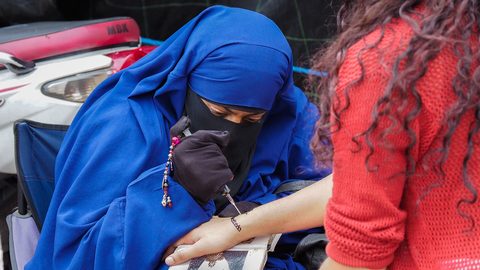 Where to Stay in Marrakesh Medina, Hivernage or the Palmeraie
Where to stay in Marrakesh comes down to one question: how much medina chaos can you genuinely tolerate? Here is what each district actually delivers.
Where to Stay in Marrakesh Medina, Hivernage or the Palmeraie
Where to stay in Marrakesh comes down to one question: how much medina chaos can you genuinely tolerate? Here is what each district actually delivers.
-
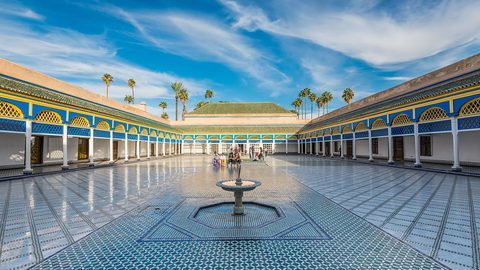 Marrakesh Things to Do Worth the Queue and What I Would Skip
Marrakesh things to do range from the genuinely magnificent to the queue-filled letdown. Here is where to spend your time and what to skip without guilt.
Marrakesh Things to Do Worth the Queue and What I Would Skip
Marrakesh things to do range from the genuinely magnificent to the queue-filled letdown. Here is where to spend your time and what to skip without guilt.
-
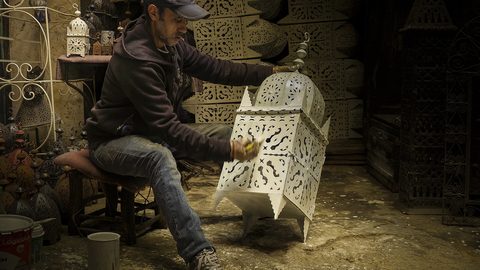 Getting Around Marrakesh When the Taxi Cannot Reach Your Riad
Getting around Marrakesh means mastering petit taxis with broken meters, medina lanes where Google Maps fails, and the No. 19 airport bus that everyone overlooks.
Getting Around Marrakesh When the Taxi Cannot Reach Your Riad
Getting around Marrakesh means mastering petit taxis with broken meters, medina lanes where Google Maps fails, and the No. 19 airport bus that everyone overlooks.
-
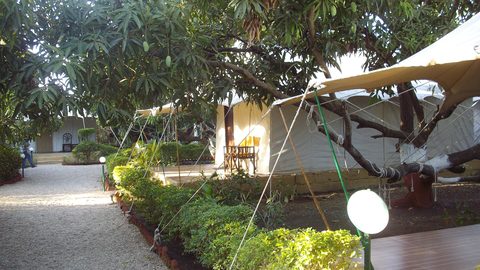 Marrakech glamping and when the tent is actually worth the price
When Marrakech glamping is a genuine desert night with fire and silence, and when it is just an expensive tent with a photo opportunity.
Marrakech glamping and when the tent is actually worth the price
When Marrakech glamping is a genuine desert night with fire and silence, and when it is just an expensive tent with a photo opportunity.
-
 Talking to Marrakech Travel Writers About What They Do Differently
Marrakech travel writers explain how they vet medina fixers, talk to riad owners off-record, and why they refuse free hammam treatments.
Talking to Marrakech Travel Writers About What They Do Differently
Marrakech travel writers explain how they vet medina fixers, talk to riad owners off-record, and why they refuse free hammam treatments.
-
 How to Read a Marrakech Destination Guide Without Getting Burnt
Marrakech destination guides carry specific biases in their medina maps, riad listings, and restaurant picks. Learn to read them critically.
How to Read a Marrakech Destination Guide Without Getting Burnt
Marrakech destination guides carry specific biases in their medina maps, riad listings, and restaurant picks. Learn to read them critically.
-
 Marrakech Hotels With Resident Animals and What That Actually Means
Some Marrakech hotels keep peacocks, tortoises, and camels. Here is how to separate genuine animal care from a lobby photo opportunity.
Marrakech Hotels With Resident Animals and What That Actually Means
Some Marrakech hotels keep peacocks, tortoises, and camels. Here is how to separate genuine animal care from a lobby photo opportunity.
-
 Turkey in 2025 — Whether the Cost, Crowds and Safety Trade-offs Are Worth It
Turkey in 2025 offers genuine appeal but demands honest planning. A candid breakdown of costs, seasonal crowds, safety realities and who should actually commit.
Turkey in 2025 — Whether the Cost, Crowds and Safety Trade-offs Are Worth It
Turkey in 2025 offers genuine appeal but demands honest planning. A candid breakdown of costs, seasonal crowds, safety realities and who should actually commit.