Reading a Marrakech Destination Guide With a Skeptical Eye
Marrakech destination guides carry specific biases in their medina maps, riad listings, and restaurant picks. Learn to read them critically.


A Marrakech Guide is Selling You Something. Know What it Is.
Every Marrakech destination guide arrives with a hidden itinerary. Not the one it prints. The one that pays for its existence. A medina map shows you five riads because those five paid the publisher for placement or trade. A restaurant review lands in your feed because the writer ate one comped meal there during Ramadan, when the kitchen ran a skeleton menu and the owner served family leftovers. An Instagram spot gets a full paragraph not because it is worth your time but because leaving it out would expose the coverage as out of touch. You can still use these guides. You just need to read the structural biases first.
The central question is simple: what is the dependency on the thing being recommended? If a publisher earns a commission when you book a specific riad, that riad will appear in lists a mediocre alternative will not. If a writer attended a press trip hosted by the Moroccan National Tourist Office, the resulting coverage will over-represent the sites that office paid to promote. If a blog monetises through affiliate links to booking platforms, every hotel recommendation is a product placement until proven otherwise. None of this makes the information false. It means you need a cross-reference protocol.
How to Read a Restaurant Recommendation
The 120 MAD Filter
A restaurant that a guide calls "authentic" without a price range is concealing something. The price of a tagine tells you more about the business model than the chef's training. Use the 120 MAD line as your filter. Above that, the restaurant must justify the cost with table service, an alcohol license, or a rooftop view. Below 120 MAD, you are in the territory of lunch counters and food stalls where the margin is thin and the food is direct. Do not treat a 250 MAD tagine in a curated courtyard as the same category as a 50 MAD skewer from a metal cart. They serve different purposes.
Check the Meal's Context
If a guide reviewed a restaurant during Ramadan, the review is not reliable. During Ramadan 2027 (8 February to 9 March, approximate dates subject to moon sighting), many kitchens operate reduced menus, close during daylight, and serve meals designed for iftar crowds rather than normal dining. A review written from a single comped meal in that period tells you nothing about the restaurant's standard service. Cross-reference the review date against the Ramadan calendar for that year. If they match, discard the recommendation.
Price Verify Against Two Channels
A guide that lists a restaurant's menu price without a month and year attached is not worth your time. This site's price date rule excludes any price without a month and year. For your own checks, take any price a guide prints and verify it against the restaurant's own website or a current menu on a delivery platform. Then check a recent guest review on Google Maps (last three months) for mentions of changed management or construction noise. A quiet street can become a building site in two weeks in Marrakech.
How to Read a Hotel or Riad Recommendation
The most profitable recommendation a guide makes is accommodation. Commission rates on hotel bookings run 5-10% of the booking value, paid by the booking platform. Tour commissions are higher at 8-15%. This does not mean every recommended riad is a bad deal. It means you should never book from a guide's link without first checking the riad's own website for the date of its last renovation or menu update.
Seasonal Price Swings
A mid-range riad in high season (March to May, October) costs 800 to 1,500 MAD per night. In low season (July to August) the same room drops to 450 to 900 MAD. The swing is 40%. A guide that prints a single price without stating the season is misleading you. A luxury riad at 2,500 MAD per night in high season buys you a hammam on site, valet parking, soundproofed rooms, and international press. A room at 400 MAD buys you a private bathroom, air conditioning, basic breakfast, and possibly rooftop access. Neither is better. They serve different budgets. The value test is simple: divide the price per night by the walking minutes to Jemaa el-Fna. If the riad is 15 minutes or more from the square, the premium for location collapses. Negotiate or look elsewhere.
The Famous Option Trap
La Mamounia charges a 250 MAD minimum drink at its bar. Barometre in Guéliz sells an equivalent cocktail for 90 to 120 MAD. uPhone courtyard dinner runs 250 to 350 MAD per head. The same modern Moroccan food at +61 or Sahbi Sahbi costs 150 to 200 MAD. The difference is not quality. It is the premium for being the name everyone knows. If your goal is a drink in a famous bar, pay the 250 MAD. If your goal is a good cocktail, pay the lower price and keep the difference. Decide which you are buying.
Why Marrakech Top 10 Lists and Medina Maps Mislead
Every published "top 10" list in Marrakech is compiled from search volume, social media mentions, and affiliate conversion data. Not from a reporter walking the streets. A list that includes only medina riads and fails to mention any hotel in Guéliz or Hivernage is a list built on advertiser relationships, not geography. A medina map that shows only advertiser properties is a flyer, not a map. If a list includes an Instagram-famous spot like the Ben Youssef Madrasa without also telling you the crowd density in the main souk arteries is shoulder-to-shoulder from 10:00 to 18:00, it is withholding the information that would save you time.
The practical fix: use any published list for names, then ignore its verdict. Look up each name independently. Search for the last three months of guest reviews. Check the property's own website for renovation dates. Verify the price against two direct booking channels. If a list quotes a price without a month and year, move on. The price verification date for Marrakech fact sheets is 2026-08-22. Any number quoted is tied to that date.


Worth it if
- You can still read any Marrakech guide quickly if you know its dependency on affiliate revenue and press trips
- Price verification against two independent sources takes five minutes and eliminates most bad recommendations
- The 120 MAD tagine line and the walking-minutes test give you objective filters for restaurants and riads
- Seasonal price swings of 40% mean waiting three months can cut your accommodation bill nearly in half
- No gifted stays or comped meals accepted on this site; every recommendation is anonymous and paid in full
Skip it if
- The majority of published top 10 lists are compiled from search volume and affiliate conversions, not actual visits
- A restaurant review written during a single comped Ramadan meal tells you nothing about standard service
- A medina map that shows only advertiser riads is a marketing document, not a navigation tool
- Famous options like La Mamounia and Nomad charge a 100% premium over equivalent quality alternatives in Guéliz
- Price volatility means any guide that prints a single price without a month and year is misleading you deliberately
How to Vet a Marrakech Guidebook
Open any Marrakech guidebook you have bookmarked. Find the first hotel or restaurant recommendation. Note the price it prints. Check whether that price includes a month and year. Then go to the property's own website. Look for the last menu update or renovation date. Then search Google Maps for reviews posted in the last three months. If the guidebook fails on any of those checks, close it and find one that does not. You will lose nothing. The information you need is in the primary sources, not the middlemen.
Read next
-
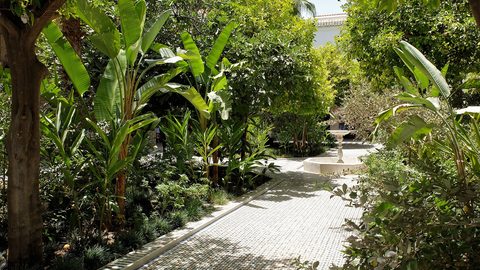
 Marrakesh Hotels and Riads What the Upgrade Genuinely Buys
Marrakesh hotels and riads range from unheated courtyard dars to Hivernage five-stars. Here is what the extra dirhams actually buy you beyond the photographs.
Marrakesh Hotels and Riads What the Upgrade Genuinely Buys
Marrakesh hotels and riads range from unheated courtyard dars to Hivernage five-stars. Here is what the extra dirhams actually buy you beyond the photographs.
-
 Where to Stay in Marrakesh Medina, Hivernage or the Palmeraie
Where to stay in Marrakesh comes down to one question: how much medina chaos can you genuinely tolerate? Here is what each district actually delivers.
Where to Stay in Marrakesh Medina, Hivernage or the Palmeraie
Where to stay in Marrakesh comes down to one question: how much medina chaos can you genuinely tolerate? Here is what each district actually delivers.
-
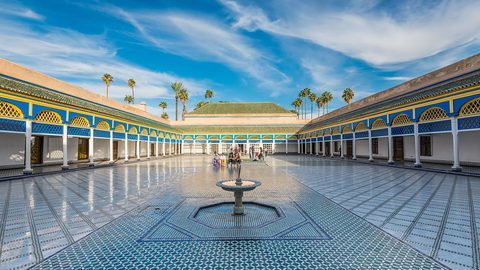 Marrakesh Things to Do Worth the Queue and What I Would Skip
Marrakesh things to do range from the genuinely magnificent to the queue-filled letdown. Here is where to spend your time and what to skip without guilt.
Marrakesh Things to Do Worth the Queue and What I Would Skip
Marrakesh things to do range from the genuinely magnificent to the queue-filled letdown. Here is where to spend your time and what to skip without guilt.
-
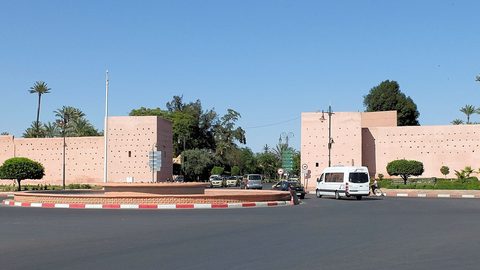 Best Time to Visit Marrakesh for Bearable Heat Fair Rates and Fewer Crowds
The best time to visit Marrakesh is November or March–April when daytime temperatures sit at 22–28°C. Here is when to go, when to avoid, and why winter evenings surprise people.
Best Time to Visit Marrakesh for Bearable Heat Fair Rates and Fewer Crowds
The best time to visit Marrakesh is November or March–April when daytime temperatures sit at 22–28°C. Here is when to go, when to avoid, and why winter evenings surprise people.
-
 Getting Around Marrakesh When the Taxi Cannot Reach Your Riad
Getting around Marrakesh means mastering petit taxis with broken meters, medina lanes where Google Maps fails, and the No. 19 airport bus that everyone overlooks.
Getting Around Marrakesh When the Taxi Cannot Reach Your Riad
Getting around Marrakesh means mastering petit taxis with broken meters, medina lanes where Google Maps fails, and the No. 19 airport bus that everyone overlooks.
-
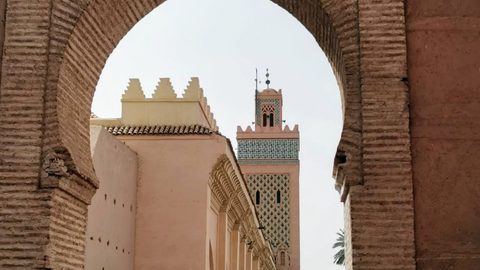 Three Days in Marrakesh Without Spending All Three in Queues
Three days in Marrakesh is enough if you sequence it right. Here is an itinerary that avoids the queues, the backtracking, and the midday heat.
Three Days in Marrakesh Without Spending All Three in Queues
Three days in Marrakesh is enough if you sequence it right. Here is an itinerary that avoids the queues, the backtracking, and the midday heat.
-
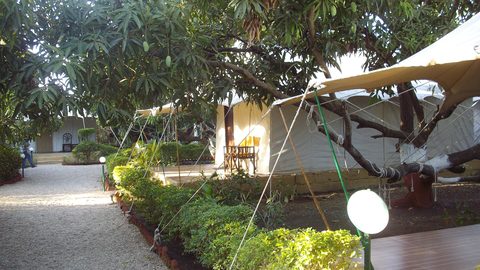 Marrakech glamping and when the tent is actually worth the price
When Marrakech glamping is a genuine desert night with fire and silence, and when it is just an expensive tent with a photo opportunity.
Marrakech glamping and when the tent is actually worth the price
When Marrakech glamping is a genuine desert night with fire and silence, and when it is just an expensive tent with a photo opportunity.
-
 Talking to Marrakech Travel Writers About What They Do Differently
Marrakech travel writers explain how they vet medina fixers, talk to riad owners off-record, and why they refuse free hammam treatments.
Talking to Marrakech Travel Writers About What They Do Differently
Marrakech travel writers explain how they vet medina fixers, talk to riad owners off-record, and why they refuse free hammam treatments.
-
 Marrakech Hotels With Resident Animals and What That Actually Means
Some Marrakech hotels keep peacocks, tortoises, and camels. Here is how to separate genuine animal care from a lobby photo opportunity.
Marrakech Hotels With Resident Animals and What That Actually Means
Some Marrakech hotels keep peacocks, tortoises, and camels. Here is how to separate genuine animal care from a lobby photo opportunity.