How to pick a Maldives resort island that actually matches what you want
The Maldives trip hinges on one choice: which island. A practical walk through reef health, transfer logistics and meal plan maths.
- Flag
-

- ISO code
- MV
- Population
- 515,696
- Currency
- MVR
- Dial code
- +960
How to Pick a Maldives Island Resort That Actually Matches What You Want
Most travellers believe the main decision in the Maldives is the room category. Overwater villa or beach bungalow. Sunset view or garden view. That is wrong. The single choice that determines whether your trip feels like a dream or a disappointment is the island itself. Pick the wrong island and no amount of upgraded bedding can fix it. Pick the right one and your entry-level room may already be perfect.
The Maldives is not a single destination. It is more than a thousand islands, each with its own reef, its own transit time, its own meal plan math and its own trade offs. You are not choosing a hotel. You are choosing your entire environment for the duration of your stay. The island is the destination. The room is just where you sleep.


House Reef or No House Reef
This is the first fork in the road. A house-reef island has a healthy coral reef right off the beach. You put on a mask and fins, wade in from the sand, and you are swimming with turtles, reef sharks and parrotfish within thirty seconds. A non-house-reef island requires a boat excursion to reach decent snorkelling or diving. That means a schedule, a cost and a group. It also means you cannot simply decide on a whim at 4pm to jump in and see something alive. If being in the water every day without planning matters to you, book an island that has a house reef. Ask directly before you confirm. Do not assume all islands have one. They do not. Some famous resorts sit on sandbanks with nothing but lagoon bottom for hundreds of metres.
What The House Reef Costs You
House-reef islands tend to be smaller because the reef ring itself defines the island boundary. A minimum size that avoids feeling confining is roughly 400 metres in length or about 10 hectares. Below that, you can walk the entire beach in under ten minutes. That suits some travellers perfectly. Others want a bigger island with multiple restaurants, a spa village and enough ground to get lost on. If you want the big-island experience, you will probably lose the house reef. Know that trade off before you book.
Transfer Exhaustion is Real. Plan for It.
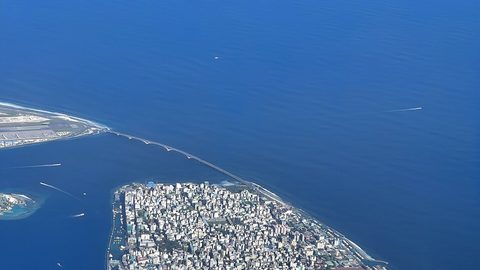
Your flight lands at Velana International Airport. Getting from that runway to your resort takes time, money and patience. The wrong connection can burn half a day and leave you too tired to care about the view.
Speedboat: The Straightforward Choice
Speedboat is the easiest option. It serves the North Malé Atoll (20 to 45 minutes) and the South Malé Atoll (30 to 50 minutes). Round trip per adult costs between USD 150 and 350. It runs all day and night. No weight limit beyond reason. No baggage rules about soft bags. No daylight dependency. If you arrive on a late flight, speedboat access matters.
Seaplane: Stunning but Strict
A seaplane opens up the rest of the atolls but comes with hard constraints. The last departure from the seaplane terminal is around 15:30 to 16:00. Arrive after that and you are spending the night in a Malé hotel. These flights operate only in daylight. They charge USD 400 to 900 per adult round trip. They enforce a strict luggage limit of 20 kg checked and 5 kg hand luggage, and only soft bags are allowed on board. Hard suitcases get rejected. You pay excess fees or you leave bags behind. The operator is Trans Maldivian Airways and there is no competing carrier.
Domestic Flight Plus Speedboat
This middle option serves atolls too far for a direct seaplane, such as Baa Atoll, Lhaviyani Atoll and Raa Atoll. The domestic flight takes roughly 20 minutes. Then you switch to a speedboat for the final leg. The total door to door time compares with a seaplane but the handling is more fragmented and the luggage moves through two vehicles. Budget an extra hour of waiting at the domestic terminal.
Book your connection through the resort or their handling agent. The fee is invoiced separately from the room rate and is mandatory. Pay it directly to the agent. Do not assume it is included.
Meal Plan Maths: Half Board vs All Inclusive
The meal plan is not a minor detail. It is a daily cost that can reach hundreds of dollars per person if you choose wrong. Here is the arithmetic.
Half board includes breakfast and dinner. Lunch and all drinks, including water at dinner, are extra. A single cocktail at a resort bar costs USD 15 to 22. A bottle of still water at dinner costs USD 6 to 10. You will drink more than you expect. The heat forces it.
All-inclusive covers breakfast, lunch, dinner and drinks. The threshold that makes it cheaper than half board plus à la carte drinks is three to four alcoholic drinks per person per day. If you drink that much or more, all inclusive wins. If you drink less, half board is the better deal. Look at your own habits honestly. If you order wine with dinner, you are likely above the line.
The Tax Stack Nobody Mentions
Every published rate carries a 10% service charge and a 16% GST, both set by the Maldives Inland Revenue Authority at their 2026 rates. On top of that, resorts charge a green tax of USD 6 per person per night. Guesthouses charge USD 3. These are not optional.
Peak season adds another layer. Between 20 December and 10 January, resorts impose mandatory gala dinner surcharges that can run into hundreds of dollars per person. Check the terms before you commit to a Christmas booking.
| Atoll | Transfer Type | Transfer Time |
|---|---|---|
| North Malé Atoll | Speedboat | 20-45 minutes |
| South Malé Atoll | Speedboat | 30-50 minutes |
| Ari Atoll | Seaplane | 25-35 minutes |
| Baa Atoll | Seaplane | 35-45 minutes |
| Baa Atoll | Domestic Flight + Speedboat | ~20 minutes flight plus boat |
| Lhaviyani Atoll | Seaplane | 40 minutes |
| Raa Atoll | Seaplane | 45 minutes |
| Raa Atoll | Domestic Flight + Speedboat | ~20 minutes flight plus boat |
Lagoon Villa vs Ocean Villa: What Each Actually Gives You
An overwater villa buys direct lagoon access, privacy from beach foot traffic and a sunset view premium that adds USD 200 to 500 per night. That is what you pay for. It does not buy guaranteed house-reef access. Many lagoon-only villas sit over water that is shallow, sandy and devoid of coral. You cannot snorkel from them. You cannot see anything under you except your own shadow. The sunset view premium is real but so is the midday sun. Without shade and without sand underfoot, many guests spend the hot hours inside the air conditioning. Ask yourself whether you actually want to be on the water all day or whether you want the beach.
Beach villas give you sand. They give you shade from trees. They give you the ability to walk straight into the ocean from your doorstep, especially on house-reef islands. They cost less. They are the smarter choice unless direct lagoon access is a specific priority.
Not All Rooms Are Equal
Some resorts handle this better than others. At Mirihi Island Resort, every room is either an overwater villa or a beach villa, and every single one has direct access to the house reef. There is no category penalty. You get the same reef quality from the entry-level room as you do from the premium one. At Soneva Fushi, the entry-level Crusoe Villa lacks the water slide and retractable roof of the higher categories. The difference is substantial. You need to research not just whether the resort has a house reef, but which room categories actually access it.


The Local Island Alternative
A resort is not your only option. Local islands offer guesthouses at USD 40 to 120 per night bed and breakfast. You get bikini beach access, local culture and lower cost. Some guesthouses include speedboat transfers in the rate. What you give up is alcohol, because local islands are dry except for liveaboards and resort day passes. You also give up resort-level privacy and, on most local islands, house-reef access. If you want to drink a beer with dinner without planning a day trip, a local island will frustrate you. If you want to sleep cheap and explore the atolls by public ferry, it works.
When to Go and What You Get for the Season
The northeast monsoon from November to April brings peak rates, calmer seas and clearer visibility for snorkeling. The southwest monsoon from May to October brings lower rates, more plankton and rougher crossings. That plankton draws manta rays. Baa Atoll's Hanifaru Bay sees peak manta ray activity from June to November. South Ari Atoll is the year-round whale shark sighting area, with peak months from August to November. If marine life is your priority, the wet season delivers better encounters. If glassy water and guaranteed sun are non-negotiable, pay the premium for the dry season.
The best value to weather ratio falls in the shoulder months. The second half of November and the month of April offer dry conditions, manageable seas and rates below the Christmas peak. Book those windows if you can flex your dates.
The Maldives’ Fine Print
None of these rules are absolute. A resort with a perfect house reef can have a seaplane schedule that forces a night in Malé. A speedboat-accessible island can sit on a dead lagoon. The monsoon can shift early or late. The concrete numbers in these recommendations come from industry sources confirmed as of August 2026, but rates and schedules change. Verify every detail with the resort or a trusted agent before you pay. The Maldives rewards preparation. It punishes assumptions.
Regions & cities in Maldives
Common Questions
How much does an overwater villa cost in the Maldives in 2026?
Entry-level overwater villa rates in low season are USD 600 to 1,200 per night. In high season, the same room is USD 1,200 to 3,000 per night. These are room rates before the 10% service charge, 16% GST and USD 6 green tax are added.
Can I arrive at Malé after 4pm and still take a seaplane to my resort?
No. Seaplane flights operate only in daylight and the last departure from the seaplane terminal is around 15:30 to 16:00. If your flight lands after that time, you must stay overnight in Malé and take a seaplane the following morning. Alternatively, choose a resort reachable by speedboat, which runs all night.
Is half board or all-inclusive better value?
The threshold is three to four alcoholic drinks per person per day. If you will drink that many or more, all-inclusive is cheaper. If you drink less, book half board and pay for drinks à la carte.
What is the difference between a house-reef island and a non-house-reef island?
A house-reef island has a coral reef within swimming distance of the beach, allowing you to snorkel from the shore. A non-house-reef island requires a boat excursion to reach good snorkelling or diving sites.
How much luggage can I take on a seaplane?
The limit is 20 kg checked and 5 kg hand luggage. Bags must be soft-sided. Hard suitcases are not allowed. Excess baggage may be rejected or charged at the operator's rate.
Do I need to pay the resort transfer fee separately?
Yes. The transfer fee is invoiced separately from the room rate and is paid directly to the resort or their handling agent. It is mandatory.
Can I drink alcohol on a local island?
No. Local islands are dry. Alcohol is not available except on liveaboards or through resort day passes. If you want to drink at your accommodation, book a resort island.
Read next
-
 Male
Male exhausts most visitors in four hours, but a forced overnight here is nearly unavoidable. Here's how to handle transfers, choose between Male and Hulhumale, and decide what's worth seeing.
Male
Male exhausts most visitors in four hours, but a forced overnight here is nearly unavoidable. Here's how to handle transfers, choose between Male and Hulhumale, and decide what's worth seeing.
-
 Turkey in 2025 — Whether the Cost, Crowds and Safety Trade-offs Are Worth It
Turkey in 2025 offers genuine appeal but demands honest planning. A candid breakdown of costs, seasonal crowds, safety realities and who should actually commit.
Turkey in 2025 — Whether the Cost, Crowds and Safety Trade-offs Are Worth It
Turkey in 2025 offers genuine appeal but demands honest planning. A candid breakdown of costs, seasonal crowds, safety realities and who should actually commit.
-
 Why the Journey to Your Safari Camp Deserves as Much Planning as the Stay
Getting to a remote safari camp is harder than most travellers expect. Plan multi-leg itineraries, bush plane connections, and transfer windows carefully.
Why the Journey to Your Safari Camp Deserves as Much Planning as the Stay
Getting to a remote safari camp is harder than most travellers expect. Plan multi-leg itineraries, bush plane connections, and transfer windows carefully.
-
 Whether an eSIM Is Worth It for Safari and Long-Haul Travellers
Is an eSIM worth it for safari or long-haul travel? A candid look at real costs, coverage gaps, and what actually works in remote destinations.
Whether an eSIM Is Worth It for Safari and Long-Haul Travellers
Is an eSIM worth it for safari or long-haul travel? A candid look at real costs, coverage gaps, and what actually works in remote destinations.