A Polished Safari Packing List That Still Travels Light
A practical guide to A Polished Safari Packing List That Still Travels Light.

Why a polished safari list starts with the bag itself
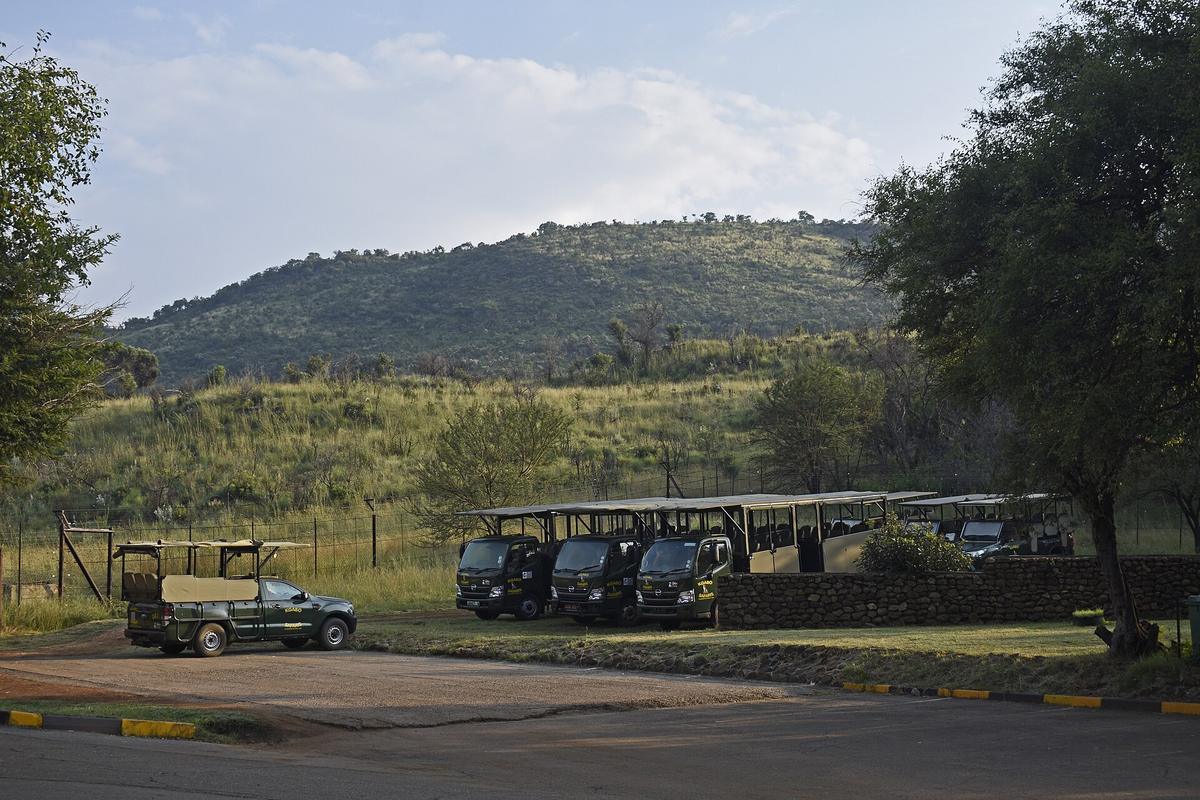
A stylish safari packing list succeeds or fails before you choose a single garment. The reason is not aesthetic but operational. On most East African bush flights in Kenya and Tanzania, the total luggage allowance is 15 kg per person including hand luggage, and bags must be soft-sided. Hard-shell suitcases are refused. AirKenya Express specifies maximum checked-bag dimensions of 60 cm by 45 cm by 33 cm and hand-luggage dimensions of 30 cm by 53 cm by 23 cm, with every item counting toward that single 15 kg total. Safarilink applies the same 15 kg limit on safari routes, with a 20 kg exception only on coastal routes to Zanzibar, Diani, Lamu, Malindi, Mombasa, Kisumu and Entebbe. In Southern Africa, bush-flight limits are typically 20 kg per person in soft-sided bags, including hand luggage.
These numbers are not suggestions. They are enforced at check-in, and excess baggage on a small aircraft can mean leaving items behind. The polished traveller therefore begins with a soft-sided duffel or holdall that has at least one flat surface. Johannesburg's O.R. Tambo International Airport will not accept irregularly shaped bags with long hanging straps, and a bag with one flat side meets the requirement while remaining flexible enough to compress into a light-aircraft hold. Look for a bag that sits comfortably at or under the dimensional limits, weighs little when empty, and closes securely without dangling straps that can catch on loading equipment.
Weight allowances and soft-bag requirements vary by carrier and route and change without notice. Before packing, confirm the specific allowance for every flight on your itinerary with your safari operator or directly with the airline. Do not assume one carrier's rules apply to the next leg.
The colour strategy that does double duty
Neutral khaki, stone, olive and sand tones are the foundation of a safari wardrobe, and the reasoning goes deeper than tradition. Tsetse flies, present in wooded and riverine areas of East Africa, are strongly attracted to dark blue and black fabrics. This is not campfire lore. Peer-reviewed research used to design tsetse control traps across the region confirmed the attraction, and wearing dark blue or black in tsetse country can draw biting flies to you. Light neutrals are less attractive to the flies and reflect heat, keeping you cooler during long game-drive hours.
There is also a legal dimension. Camouflage-pattern clothing is restricted for civilians in Kenya under the National Police Service Act and the Kenya Defence Forces Act, which prohibit wearing anything closely resembling police or military uniform. Tourists risk confiscation or being asked to change. Enforcement is inconsistent and depends on the country, the specific officer and how closely the pattern resembles an official uniform. Rules differ across Tanzania, Uganda, Zambia and other safari destinations. The safest approach is to leave camouflage at home and verify the regulations for each country on your itinerary with your safari operator.
A polished palette does not mean dull. Build a capsule of lightweight trousers, long-sleeved shirts and a versatile mid-layer in complementary neutrals, then add personality through a scarf, a leather watch strap or a canvas belt. The result looks intentional rather than costume-like, and every piece works with every other piece, which is how you pack light without looking repetitive.
Sun protection that earns its weight
Sun exposure on safari is unusually intense. UV intensity increases approximately 10 to 12 percent for every 1,000 metres of elevation gain because thinner atmosphere filters less radiation. Many East African safari locations sit at 1,700 to 1,900 metres, combining high altitude with equatorial latitude for exceptionally strong midday sun. The CDC advises safari travellers to use a broad-spectrum sunscreen of SPF 15 or higher with both UVA and UVB protection, wear a wide-brimmed hat with a circumferential brim of at least 3 inches, and use UV-rated sunglasses.
A hat with a 3-inch brim all the way around shields the ears, neck and nose, areas that a baseball cap leaves exposed. Pack one that holds its shape after being folded or choose a crushable style that recovers well. For sunglasses, polarised lenses cut glare off water and vehicle bonnets, but the non-negotiable feature is full UV protection. Look for a label stating 100 percent UV400 or UV absorption up to 400 nm. The CDC recommendation does not specify polarisation, so treat it as a preference rather than a requirement.
Sunscreen belongs in your hand luggage, not checked, so you can reapply during transit stops. A solid stick or a travel-size tube avoids the liquid restrictions headache and slips into a day bag without leaking.
Insect repellent and the concentration that actually works
The UK Malaria Expert Advisory Group recommends a 50 percent DEET-based insect repellent as the first-choice bite-prevention measure for travellers to malarial regions. The guidance notes that there is no further increase in protection duration beyond 50 percent concentration, so higher percentages add solvent without adding benefit. A 50 percent DEET formula balances efficacy with a less greasy feel than stronger concentrations, and it is widely available in pump-spray and lotion formats.
Apply repellent after sunscreen, not before, and reapply according to the product instructions rather than guessing. For evenings around the campfire or dinner under the stars, long sleeves and long trousers provide a physical barrier that reduces the amount of repellent you need to apply and the skin area exposed to biting insects. A lightweight long-sleeved shirt in a pale neutral does not feel hot and keeps both sun and insects off your arms.
The laundry advantage and how to use it
Most safari lodges and tented camps in Kenya offer complimentary laundry service with a typical 24-hour turnaround, which is the single biggest lever for packing light. You can plan for as few as three or four days of clothing and rely on daily or alternate-day laundry to keep everything fresh. The catch is that nearly all properties exclude underwear from laundry for cultural reasons. Guests are provided with washing powder to hand-wash underwear themselves.
This shapes your packing in two ways. First, choose quick-drying underwear in a fabric that will air-dry overnight in a tented camp bathroom. Second, pack a small length of travel clothesline or a few lightweight clips, because not every bathroom has convenient hanging points. A universal sink plug is also useful, as basin stoppers are not guaranteed.
Laundry service availability, whether it is complimentary or charged, and turnaround times vary by individual lodge or camp. Confirm with your specific accommodation before relying on laundry to halve your packing volume. A camp that charges per item or takes 48 hours changes the arithmetic.
Binoculars and the case for choosing carefully
Binoculars are the one piece of equipment that can transform a game drive, and the standard recommended specification for safari is 8x42 or 10x42. An 8x magnification offers a wider field of view and a steadier handheld image, which matters when you are tracking a moving animal from a vehicle. A 10x magnification provides more reach for distant subjects but amplifies hand shake and narrows the field of view. An objective lens of 42 mm gathers sufficient light for dawn and dusk game drives, when many predators are most active.
The choice between 8x and 10x is a tradeoff. If you are new to binoculars or prone to unsteady hands, 8x42 is the more forgiving option. If you are experienced and prioritise distance over field of view, 10x42 rewards the steadier grip. Either specification is a sound investment that serves well beyond safari, from birdwatching to theatre. Compact binoculars with smaller objective lenses struggle in low light, so resist the temptation to save weight at the expense of the 42 mm lens.
Putting the list together without overpacking
A polished safari wardrobe that stays under 15 kg is an exercise in discipline, not deprivation. Start with the bag, confirm the weight allowance for every flight, and build a colour-limited capsule around neutrals that avoid tsetse attraction and legal risk. Add sun protection that meets the CDC's minimum standards, a 50 percent DEET repellent, quick-drying underwear that you can wash yourself, and a pair of 8x42 or 10x42 binoculars. Everything else is negotiable.
The items that most often push a bag over the limit are second pairs of shoes, full-size toiletries and just-in-case outfits that never get worn. One pair of comfortable closed shoes for walking and one pair of sandals for camp is enough. Decant toiletries into small silicone bottles and leave the full-size containers at home. If you are unsure about an item, ask whether it serves at least two purposes or can be replaced by something already in the bag. If the answer is no, leave it out.
Sources and verification
- airkenya.com — Research source checked for this guide
- yellowzebrasafaris.com — Research source checked for this guide
- africansafaris.com — Research source checked for this guide
- journals.plos.org — Research source checked for this guide
- valleysafaris.com — Research source checked for this guide
- gov.uk — Research source checked for this guide
Common Questions
What is the luggage weight limit for safari flights in East Africa?
On most East African bush flights in Kenya and Tanzania, the total allowance is 15 kg per person including hand luggage. Safarilink applies a 20 kg exception on coastal routes to Zanzibar, Diani, Lamu, Malindi, Mombasa, Kisumu and Entebbe. In Southern Africa, limits are typically 20 kg per person. Always confirm the specific allowance for each flight with your safari operator or the airline, as limits vary by carrier and route and can change without notice.
Why are hard-shell suitcases not allowed on safari flights?
Hard-shell suitcases are refused on most East African bush flights because they cannot compress to fit into the small holds of light aircraft. Soft-sided bags are required, and at Johannesburg's O.R. Tambo International Airport, bags must have at least one flat surface and no long hanging straps.
Can I wear dark blue or black clothing on safari?
It is best to avoid dark blue and black fabrics in East African tsetse fly areas. Peer-reviewed research confirms that tsetse flies are strongly attracted to these colours. Light neutral tones are less attractive to the flies and also reflect heat.
Is camouflage clothing allowed on safari?
Camouflage-pattern clothing is legally restricted for civilians in Kenya and may be confiscated. Rules differ across Tanzania, Uganda, Zambia and other safari destinations, and enforcement is inconsistent. Verify the regulations for each country on your itinerary with your safari operator before packing.
What concentration of DEET insect repellent should I use?
The UK Malaria Expert Advisory Group recommends a 50 percent DEET-based insect repellent as the first-choice bite-prevention measure. There is no further increase in protection duration beyond 50 percent concentration, so higher percentages are unnecessary.
Read next
-
 Riad or Resort in Morocco Which Stay Fits Your Trip
A practical guide to Riad or Resort in Morocco Which Stay Fits Your Trip.
-
 UK City Breaks and Whether Central Hotels Justify Their Higher Prices
Are central hotels worth more in Edinburgh, York and Bath? Compare room premiums, transport budgets and cultural access before choosing your base.
-
 Turkey in 2025 — Whether the Cost, Crowds and Safety Trade-offs Are Worth It
Turkey in 2025 offers genuine appeal but demands honest planning. A candid breakdown of costs, seasonal crowds, safety realities and who should actually commit.
-
 Why the Journey to Your Safari Camp Deserves as Much Planning as the Stay
Getting to a remote safari camp is harder than most travellers expect. Plan multi-leg itineraries, bush plane connections, and transfer windows carefully.