The Best Time to Visit Male and Hulhumale and When the Premium Is Justified
The best time to visit Male and Hulhumale: why the December-to-March dry monsoon matters less here, and why Ramadan is the real dealbreaker for a layover.
The Best Time to Visit Male and Hulhumale and When the Premium is Justified
Most travellers assume the best time to visit Male matches the resort-island peak of December to March, when the northeast monsoon brings blue skies and flat seas. That assumption costs you money. In Male itself, the dry season buys you one concrete thing: the ability to walk the streets without wading through floodwater. It does not buy you a better beach, calmer lagoon access, or a sunset cocktail, because none of those exist inside the capital. The premium you pay for a Male hotel room in January only makes sense if you are transiting through Velana International Airport on a tight schedule, or if you plan to use the city as a base for public-ferry island hopping. For everyone else, the premium is wasted.
What the Dry Monsoon Actually Changes in a City
Flooding, Humidity and the One Real Gain
Male sits on the same atoll as the airport and the neighbouring island, so its monsoon pattern is identical to the rest of Male Atoll. The Maldives dry monsoon runs May through October, bringing wind from the southwest at 10 to 20 knots and monthly rainfall that peaks in September at 240 to 280 mm. The northeast monsoon runs November through April, with lighter winds from the northeast at 5 to 15 knots and a dry February averaging 50 to 70 mm. Those numbers matter for visibility on the atoll edges, where underwater visibility jumps from 10 to 20 metres in the wet season to 20 to 40 metres in the dry, peaking from January through March. But you are not diving in Male. You are walking across pavements where drainage is poor and scooters park on every inch of kerb. A heavy September downpour floods the streets of Henveiru and Machchangolhi in minutes. Waterproof footwear is not a luxury here; you need it. The dry season solves that. It also lowers the humidity enough that walking the 2.1 kilometres of Sinamale Bridge at sunset becomes something you might actually do.
That is the full extent of the benefit. The city does not open up more in good weather. The Fish Market still operates at 4 pm in the rain. The Friday morning closure of nearly everything still applies in February. The call to prayer from dozens of competing mosques, especially the amplified Fajr call before dawn, does not pause for sunshine. The dry season is real, but its value in Male is practical, not aesthetic.


Why December to March is Peak and Who Should Pay for it
The Occupancy Squeeze
Male December to March is the period of highest hotel occupancy on the island, driven almost entirely by resort transfer traffic through Velana International Airport. The 2024 data from the MMPRC quarterly reports shows average occupancy in Male and Hulhumale hotels hitting near-full capacity in the first month of the year, the most expensive month. That drops to roughly half in June, the cheapest. The price gap is real: shoulder-season dates in May and October run well below the peak rate. But the cheap rate is a false economy for short trips. A speedboat crossing between the airport and the city costs a fixed USD 150 to 250 round trip per booking, set by the boat operators and quoted in 2025. That line item dilutes any savings on stays under three nights. If you are only in Male for one night because your seaplane flight to a resort did not make the last departure by 16:00, booking a cheap June room still leaves you paying the boat fare. The premium of a peak-season booking is not avoidable; it is the cost of being in transit during the highest demand window.
When the Premium Earns Its Keep
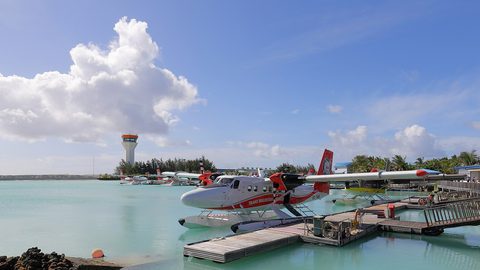
If you are a transit passenger with a late arrival at MLE, the resort transfer window from Trans Maldivian Airways closes around 16:00. Any flight landing after 15:30 forces an overnight in Male or Hulhumale. That overnight is where the peak-season premium buys you something: availability. During the high-demand weeks, you need to book ahead. In June, you can walk into a guesthouse on Hulhumale and find a room. The premium is justified when it secures the room you need to make your connection the next morning. It is not justified if you are choosing Male as a destination for a holiday and paying peak rates for a city you could visit in October for significantly less.
| Month | Rainfall Avg | Occupancy Avg | Key Event | Verdict |
|---|---|---|---|---|
| January | 50-70 mm | Near full | Peak resort transit | Pay premium only if you need a room on arrival |
| February | 50-70 mm | Very high | Driest month | Best weather, high demand, book ahead |
| March | 60-80 mm | High | End of northeast monsoon | Still dry, rates start to dip after mid-month |
| April | 100-150 mm | Moderate to high | Monsoon transition | Shoulder value, good compromise |
| May | 200-250 mm | Low to moderate | Southwest monsoon onset | Cheaper, but expect rain and street flooding |
| June | 220-260 mm | Lowest | Lowest occupancy | Cheapest month, but transfer cost dilutes savings |
| July | 200-240 mm | Low | Independence Day 26 July | Wet, some public holiday closures |
| August | 180-220 mm | Moderate | Late monsoon | Still wet, occupancy rising for September shoulder |
| September | 240-280 mm | Moderate | Rainfall peak | Wettest month, skip unless you have no choice |
| October | 150-200 mm | Low to moderate | Monsoon transition | Second shoulder, good value if you accept rain |
| November | 100-150 mm | Moderate to high | Northeast monsoon begins | Dry season start, rates climb |
| December | 70-100 mm | High to near full | Festive minimum stay period | 5- to 7-night minimums in many hotels until 10 Jan |
Ramadan Male Travel: When the City Stops Serving Food
Ramadan Male travel presents a specific problem that has nothing to do with weather. During the holy month, most local cafés and café closure lasts from dawn until sunset. The establishments that remain open operate a reduced schedule, and alcohol service is suspended everywhere except the Hulhule Island Hotel at the airport. Ramadan dates vary, but for 2026 the dates are 18 February to 19 March. This overlaps with the end of the dry season, creating a situation where the weather is excellent but the city is functioning on a different clock. You can still buy food at the airport and at some international hotels in Hulhumale, but the local experience of eating masroshi at Seagull Café or picking short eats at Sala Thai becomes impossible during daylight hours. If your trip relies on local food culture, Ramadan is the wrong time to be in Male. If you are only transiting and do not care about eating on the street, the dry weather is a bonus and the reduced crowds are an advantage.
The public ferry schedule also contracts. Friday services are already severely reduced; during Ramadan, the whole week runs on a slower cadence. Confirm ferry times in person at the Villingili Ferry Terminal the day before you travel. Assume nothing.
Velana Airport Transit Season: When the Transfer Traffic Dictates Your Schedule
The Festive-Season Minimum Stay Trap
Velana Airport transit season is not a meteorological season. It is the period from December to early January when resort transfer traffic through MLE is so dense that hotels in Male and Hulhumale impose a festive-season minimum stay of five to seven nights, from 20 December to 10 January. This is individual hotel policy, not a government mandate, and it changes every year. If you are arriving on 22 December expecting a single-night layover, you will find that every guesthouse in Hulhumale requires you to book for the full week. Verify the policy with each operator before you book anything.
Late Arrival, Every Month
The consequence of late arrival is the same year-round. If your flight lands after 15:30 and your resort requires a seaplane connection, you stay overnight. That overnight is where the transit traffic matters. In peak season, you compete for rooms with dozens of other stranded passengers. In June, you do not. The book ahead rule applies most forcefully to the period between 1 December and 10 January. Outside that window, you can arrive without a reservation and find something, though you will pay the Green Tax, set by the government at USD 3 per person per night in guesthouses and USD 6 in resorts, plus 16 per cent tourism GST and the near-universal 10 per cent service charge.
Shoulder Months and the Cheapest Window
May and October are the shoulder month windows that deliver the best balance of price and tolerable weather. The monsoon is in transition, so you will get rain, but not the September peak. Occupancy sits at its lowest band, and rates drop well below the peak weeks. If you are a budget-conscious digital nomad wanting city convenience for more than a couple of days, May or October is the smart play. The catch is the scooter rain. Male is a city of scooters, and when it rains, the traffic chaos multiplies. Walking becomes the better option, but walking requires waterproof footwear and tolerance for stepping into traffic to avoid the scooter-parked pavements.
June is the cheapest month by occupancy rate, but the cheapest accommodation does not make a trip worth it if you are only staying one or two nights, because the fixed boat fare eats the saving. If you are staying five nights or more, June works. If you are staying one night, the premium of a dry-season room is a better use of money than the cheap room plus a speedboat crossing priced at USD 150 to 250 round trip.

What to Do If You Have One Full Day
The One-Day Order of Attack
One full day is the minimum days you need to see Male's core sights and get a feel for urban Maldives. Anything beyond two days requires day trips to avoid boredom. Here is the order that works:
- Start at the local market before the heat peaks, then walk to the Fish Market for the 4 pm tuna landings.
- Visit Hukuru Miskiy, the coral-stone mosque from 1658, then the Grand Friday Mosque and Islamic Centre for orientation.
- Cross Sinamale Bridge to Hulhumale on foot at sunset. The bridge is free and the walk takes about 25 minutes. The view back toward Male is better than anything you will find on the artificial beach.
- Eat dinner at the Hulhumale beachfront night market stalls, which open after Maghrib prayer. Grilled skewers and fresh coconut water.
What to Skip
If you are staying in Male itself, the Artificial Beach is crowded with local families at dusk and is not a swimming destination. The Male Surf Point off the seawall has a consistent right-hand break if you brought a board, but there is no rental shop nearby.
Common Mistakes That Cost You Time and Money
Ferries, Taxis and SIM Cards
The common mistake travellers make is assuming they can book a public ferry to the atolls on the day of travel. Schedules are sparse, change without notice, and Friday services are severely reduced. Confirm times in person at the Villingili Ferry Terminal the day before you want to travel. Do not rely on any online source.
The other mistake is assuming taxis will cross between Male and Hulhumale without negotiation. The getting around fare within Male is MVR 25 to 30; to the neighbouring island it is MVR 50 to 70. Many drivers refuse the bridge crossing entirely. Have the fare agreed before you close the door.
Tourist SIM cards from Dhiraagu or Ooredoo require Maldivian ID for registration if you buy them in the city. Buy at the airport arrival hall instead. Free Wi-Fi is rare and slow; do not rely on café connections.
The Day Trip You Should Not Skip
One more thing: the public ferry to Villingili Island costs MVR 5.5 and takes five minutes. Villingili is a leafy, quiet escape from Male's intensity. It is the best day trip you can do without leaving the atoll. Do not skip it just because it is close.
The Only Reason to Pay the Premium
The premium of the best time to visit Male is justified in exactly one scenario: you are a transit passenger arriving after 15:30 in December or January, and you need a room to make your morning seaplane connection. In that case, the premium buys availability. You pay it because there is no alternative.
If you are choosing Male as a destination, the premium is never justified. The city is a transit hub, not a resort. The northeast monsoon does not transform it into a resort-style escape. The dry season keeps the streets walkable. That is its only value. Book for May or October, stay in Hulhumale, and use the money you save on the ferry to Villingili and the grilled fish at Sea House rooftop. That is the smart move.
Common Questions
Should I stay in Male or Hulhumale for a transit night?
Hulhumale, unless you want to be in walking distance of the Fish Market and Old Friday Mosque. Hulhumale has wider streets, a beach, and more guesthouses. Male is chaotic and sensory overload. The public ferry between them is MVR 5.5 and runs frequently until late evening.
Can I buy alcohol in Male?
No. Alcohol is not available anywhere in Male or Hulhumale. The only exception is the Hulhule Island Hotel at the airport. This is non-negotiable. Do not plan a trip to Male expecting a drink.
How do I get from the airport to Male without a taxi?
Take the public ferry. It runs from the airport island to Male in 10 minutes for MVR 10 and to Hulhumale in 5 minutes for MVR 5.5. Taxis cost MVR 85 to 100 and cross the Sinamale Bridge, but many drivers refuse the bridge crossing. Negotiate the fare before you get in.
Is it worth visiting Male during Ramadan?
Only if you are transiting and do not plan to eat on the street. Local cafes close during daylight. The weather is dry. If your trip depends on local food culture, skip Ramadan. If you just need a bed and a flight connection, the reduced crowds are a benefit.
Read next
-
 Male Hotels Cost What One Night Should and Should Not Run You
What Male hotels should and should not cost for one night: real price bands from MVR 400 guesthouses to the Hulhule Island Hotel, with dated figures.
-
 Male Where to Stay for One Night Before Your Resort Transfer
Where to stay in Male or Hulhumale for one night: I break down the real cost, the taxi problem, and why Hulhumale Phase 1 wins for most transit passengers.
-
 Male Things to Do in One Day That Are Actually Worth Your Time
Things to do in Male in one day: the 1658 coral-stone mosque, the 4pm fish market chaos, and why Villingili is the best escape from the scooter noise.
-
 Male Getting Around by Taxi Ferry and Bridge Without Getting Stuck
Getting around Male and Hulhumale: taxi fares, why drivers refuse the bridge, public ferry cash rules, and the Friday schedule trap you must avoid.
-
 Male Itinerary for a Late Arrival and Next-Day Resort Transfer
A Male itinerary for a late arrival and next-day resort transfer: where to sleep, when to catch the ferry, and the Friday schedule trap that costs you the seaplane.
-
 Male Food Where to Eat Between Flights Without Wasting a Meal
Eating in Male and Hulhumale between flights: where to get masroshi at Seagull Café, hedhikaa at Sala Thai, and why Sea House is for the view not the food.
-
 Choosing the right Maldives island the decision that makes the trip
The Maldives trip hinges on one choice: which island. A practical walk through reef health, transfer logistics and meal plan maths.
-
 Turkey in 2025 — Whether the Cost, Crowds and Safety Trade-offs Are Worth It
Turkey in 2025 offers genuine appeal but demands honest planning. A candid breakdown of costs, seasonal crowds, safety realities and who should actually commit.
-
 Why the Journey to Your Safari Camp Deserves as Much Planning as the Stay
Getting to a remote safari camp is harder than most travellers expect. Plan multi-leg itineraries, bush plane connections, and transfer windows carefully.