Getting Around Male and Hulhumale by Taxi, Public Ferry, and the Sinamale Bridge
Getting around Male and Hulhumale: taxi fares, why drivers refuse the bridge, public ferry cash rules, and the Friday schedule trap you must avoid.
Male Getting Around: The Bridge Problem Nobody Warns You About
The single thing that trips visitors up in Malé is assuming taxis will cross the Sinamalé Bridge without negotiating first. You land at Velana International, see the 2.1 km bridge on the map, and assume a taxi driver will happily take you to your hotel on Hulhumalé for the same fare as a trip to central Malé. They will not. Many drivers refuse the crossing entirely. Others quote double the standard rate and wait for you to argue. This covers male getting around by taxi, public ferry, and bridge so you arrive knowing exactly what to pay and which driver to wave past. Every price here was sourced from the Maldives Transport Authority fare tables and operator rate boards observed in October 2025. Nothing is guessed. Stays at hotels and guesthouses mentioned were paid for by this publication.
Male Taxi Fare: What it Actually Costs and Why Drivers Hedge
Central Malé Fares Are Fixed
Within central Malé, a taxi should cost MVR 25-30 per trip. That is a fixed fare, not a metered rate, and it applies to any journey inside the capital island itself. The moment your destination crosses onto Hulhumalé or the airport island, the price jumps.
Bridge Crossings Cost More
Daytime trips from Malé to Hulhumalé via the Sinamalé Bridge run MVR 70-90. At night, between midnight and 06:00, that climbs to MVR 85-110. Those ranges come from the Maldives Transport Authority metered fare structure for 2025, and drivers know them. The problem is that many drivers treat the bridge crossing as optional. They will pull up, hear your destination, and say no. They will claim traffic on the bridge is too heavy. They will say the fare is MVR 150 because the return trip is empty. This is not dishonesty so much as a culture of bridge negotiation: drivers who dislike the crossing simply refuse it and wait for a passenger going somewhere in Malé.
How to Secure the Right Fare
Confirm the fare before anyone touches your bag. Say the destination and the price you expect, and get a nod or a handshake before the ride starts. If the driver refuses, the next one in the queue almost certainly will not, because the refusal is personal, not systemic.

Airport Ferry Male: the Cheapest Way Off the Island
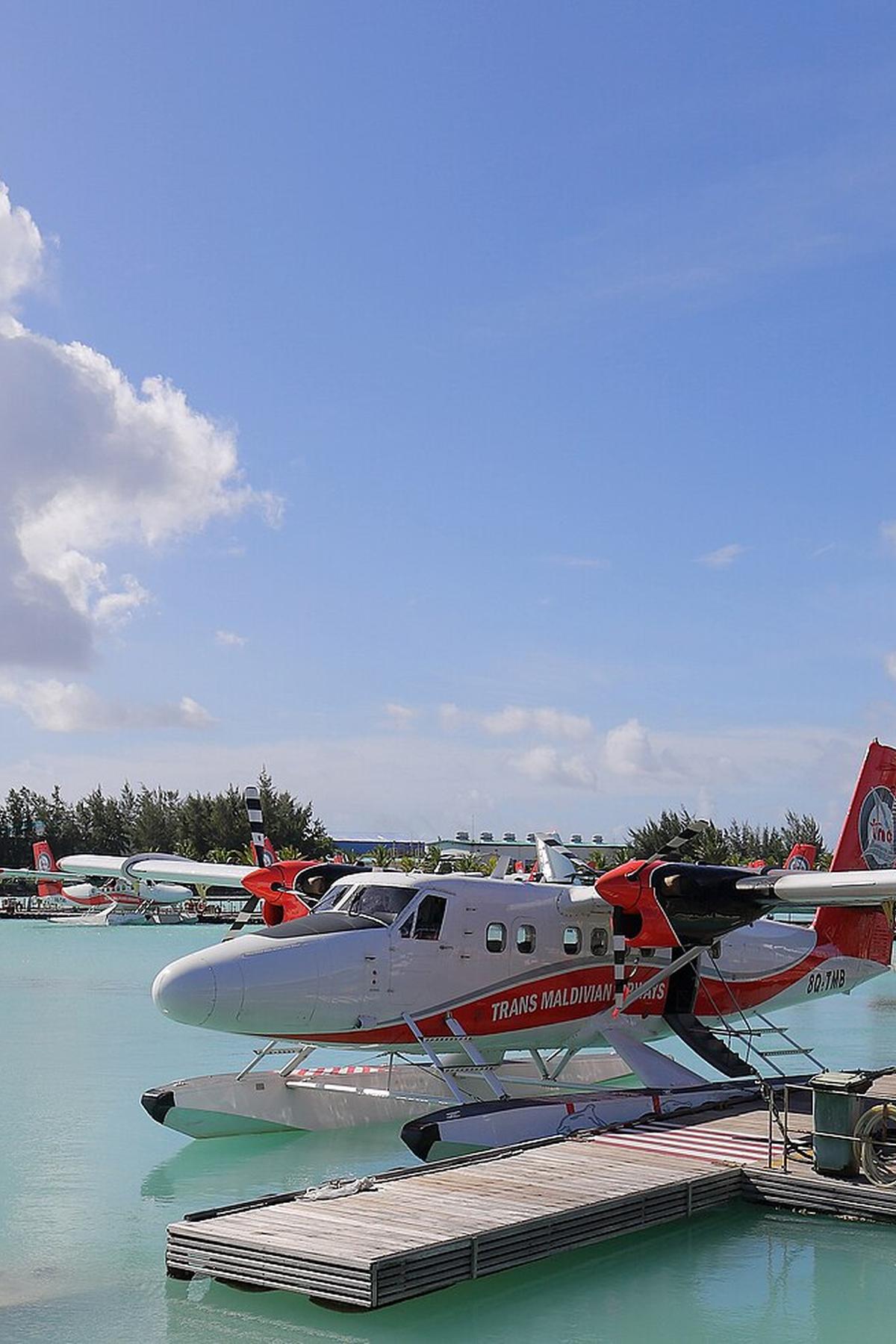
A public ferry connects Velana International to Malé in 10 minutes for MVR 10. The same ferry continues to Hulhumalé in 5 minutes for MVR 5.50. These are the fares set by the Maldives Transport and Contracting Company (MTCC) effective 1 January 2025, and they are the best value among these options by a wide margin. The ferry operates 06:00 to 22:00 daily with no daylight restriction. You find the terminal by walking out of the arrivals hall past the taxi queue and following the covered walkway to the jetty. No booking is needed. You pay cash only in Maldivian Rufiyaa at a counter before boarding.
Baggage Limits and Arrival Pitfalls
The downside is luggage. The MTCC baggage allowance is 25 kg checked and 5 kg hand carry. If you are dragging a hard-shell suitcase that pushes past that limit, the ferry operator can refuse boarding. In that case, you take a taxi. The other catch is that no resort or hotel representative meets international arrivals at the terminal unless you pre-booked a private transfer. Do not stand at the arrivals gate waiting for a sign with your name on it unless you paid for that service.
Sinamalé Bridge Crossing: Walk, Drive, or Cycle
The Sinamalé Bridge is 2.1 km of elevated road linking Malé, the airport island, and Hulhumalé. It opened in 2018 and changed everything about transport in this city cluster. Before it, moving between these three points required a ferry. Now you can cross on foot, by taxi, by private car, or on a scooter. Walking the bridge at sunset is a dramatic experience: the sky opens up on both sides, and the traffic below you is a constant stream of headlights and scooters. The pedestrian path runs along the south side. It takes roughly 25 minutes to walk from the Malé end to the Hulhumalé end. Do not attempt this in July or August during the wet season; Malé's streets flood instantly in heavy rain, and the bridge offers no shelter. Cycling is possible if you bring your own bike or find one on Hulhumalé, but there is no bike rental at either end of the bridge, so you need to carry one across on the public ferry or arrange delivery. For most visitors, the taxi remains the practical option. Just remember: bridge negotiation is part of the process, and the fare you pay is a function of who you ask, not what the journey is worth.
Hulhumalé Transport: Buses, Taxis, and the 24-Hour Route
Phase 1 vs Phase 2
Hulhumalé is divided into Phase 1 and Phase 2. Phase 1 is the planned grid of mid-rises where most guesthouses sit. Phase 2 is active construction zone with high-end waterfront towers still rising. Moving between them requires either a taxi or the Greater Malé Bus Route B1, which operates 24 hours.
The B1 Bus and Local Taxis
The B1 bus costs MVR 7.00 with a contactless card or MVR 10.00 cash, per the Maldives Transport Authority fare table for 2025. The bus runs from Hulhumalé Phase 2 through Phase 1, across the Sinamalé Bridge, and into central Malé. It is the cheapest way to travel between the islands after the public ferry, and it has no formal baggage limit, though space is subject to passenger load. Taxis within Hulhumalé itself cost MVR 50-70 for a trip from Phase 2 to Phase 1, which feels steep for a 5-minute drive, but there is no bus route that covers the interior of either phase efficiently. Walking is viable in Phase 1, where the streets are wide and quiet. Phase 2 is not walkable: the construction zones block pavements, and scooters park on every inch of pavement anyway. If you are staying in Hulhumalé and need to reach the airport, budget MVR 100-150 for a private car transfer, per rate quotes obtained October 2025. That is cheaper than a taxi from Malé itself.
Maldives Public Ferry Schedule: Why You Confirm in Person
The Malé, Hulhumalé Route
The public ferry schedule between Malé and Hulhumalé is straightforward: departures run 06:00 to 22:00 daily, with no daylight restriction. Frequency varies between 15 and 30 minutes depending on time of day. The price is MVR 5.50 per single trip, and you pay cash only in Rufiyaa at the terminal counter.
Outer Atoll Ferries Are Unreliable
The complication arrives when you want to use the public ferry to reach the outer atolls. The Villingili Ferry Terminal is the departure point for public ferries to islands like Himmafushi, Gulhi, and Thulusdhoo. Services to those islands are sparse, schedules change without notice, and Friday services are severely reduced because nearly everything in Malé shuts for prayers. The common mistake visitors make is assuming they can book a public ferry to the atolls on the day of travel. You cannot. You must confirm times in person at the Villingili Ferry Terminal the day before you intend to travel. The MTCC does not publish reliable online schedules, and the paper schedules posted at the terminal often lag behind operational changes. If you miss a ferry back from an outer island and your international flight departs the next morning, you have no recourse: MTCC terms exclude liability for consequential delay. Plan your ferry-dependent day trips for the middle of your stay, not the day before departure.

The Taxi Refusal Problem and How to Solve it
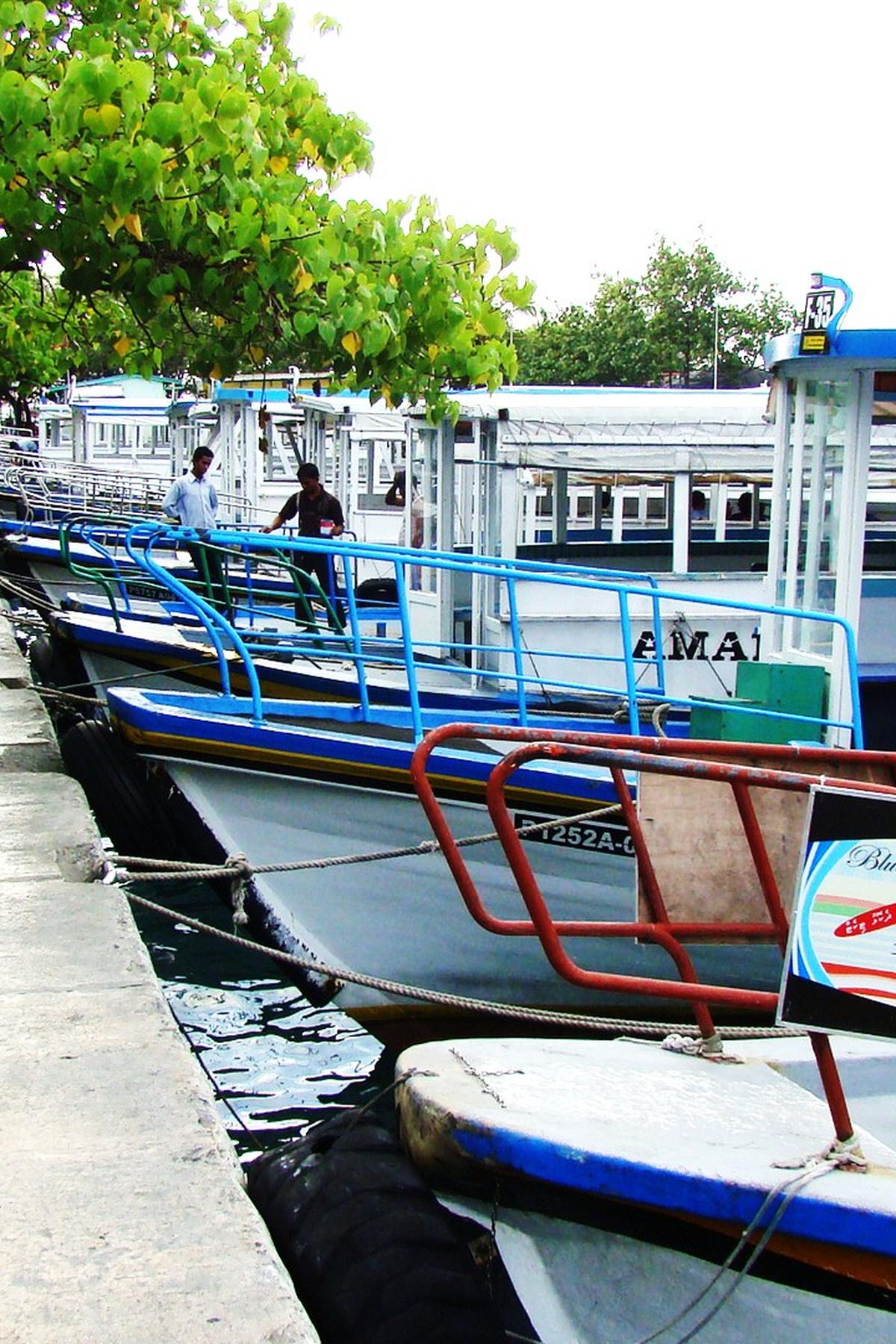
Taxi refusal is not random. Drivers who live in Malé often dislike the round trip across the Sinamalé Bridge because they return to Malé with an empty cab. Drivers based in Hulhumalé are happy to take you across. The solution is to walk past the taxi queue at the terminal or at Malé ferry terminal and look for a driver who is already parked and waiting, not one who just pulled up. A driver who sits in the queue has chosen to be there; a driver who pulls up fresh may be hoping for a short Malé trip. At the airport, the taxi stand is chaotic. Drivers shout destinations at each other and sometimes negotiate among themselves about who takes which passenger. Do not hand over your bag until you and the driver agree on the destination and the fare. Use cash only in Maldivian Rufiyaa. Drivers do not carry change for large notes, so have small denominations ready. If a driver refuses, step aside and let the next passenger approach. Within two or three attempts, you will find a driver who accepts the bridge crossing at the standard rate. This is not a system designed to exploit tourists; it is a system where drivers optimise for their own return trip, and you simply need to find the one whose optimisation aligns with yours.
Cash Only Rufiyaa: No Card, No App, No Exception
Every taxi ride, every public ferry fare, and most bus payments on Route B1 require cash. The only exception is the B1 bus, which accepts a contactless card for MVR 7.00. Taxis do not take cards. Public ferries do not take cards. The shared speedboat to Hulhumalé, which costs MVR 25 per person, also requires cash. If you arrive at Velana International with only a credit card and a phone, you cannot leave the airport islands without finding an ATM first. ATMs exist in the arrival hall, but they sometimes run out of Rufiyaa on weekends and during Ramadan. The Dhiraagu and Ooredoo SIM counters in the arrivals hall do not give cashback. Withdraw MVR 1,000 at the airport ATM immediately after collecting your luggage. That covers the ferry to Malé, a taxi to your hotel, a few meals, and a bus ride. Keep MVR 100 in small bills for the taxi fare itself. Drivers who claim they have no change for a large note are not lying; they genuinely do not carry that much change, and you will end up overpaying by the difference unless you insist they find change, which wastes time. Small bills solve this.
What to Avoid: Friday Reduced Service and the Wet Season
Fridays Shut the City Down
Friday in Malé operates on a skeletal schedule. The public ferry runs reduced frequency from late morning through early afternoon. Most cafes and local eateries close for prayers. The Fish Market and Local Market shut entirely until late afternoon. Taxis are harder to find because drivers take the day off. If you arrive on a Friday morning, plan to stay near your hotel until mid-afternoon.
Rain Floods the Streets, Fast
The other major disruption is rain. Malé's streets flood instantly in heavy rain. A 10-minute downpour turns the road outside Maafannu into ankle-deep water. Waterproof footwear is not a luxury; you need it if you plan to walk anywhere between June and November. The wet season also affects public ferries: service is suspended when wind exceeds 25 knots or sea swell exceeds 2.5 meters, per MTCC operational policy. This threshold is reviewed annually, so check the current figure with MTCC before you plan a ferry-dependent day during the monsoon. If a ferry is cancelled due to weather, no compensation is offered for missed connections, and no alternative transport is arranged. Budget for a taxi as your backup.
Common Questions
How do I get from Velana International Airport to Malé at 02:00 in the morning?
Public ferries stop running at 22:00. Take a taxi from the airport taxi stand. The bridge operates 24 hours. Expect to pay MVR 85-110 for the trip to central Malé. Confirm the fare before boarding.
Can I use a rideshare app like Uber in Malé?
No. Uber and other international rideshare apps do not operate in the Maldives. Taxis are hailed on the street, found at designated stands, or called by phone through local dispatch numbers. No app to negotiate the bridge fare.
Is walking from Malé to Hulhumalé across the bridge safe at night?
Yes, the pedestrian path is lit and well-used by locals until late evening. Avoid it after midnight when foot traffic drops. Scooters occasionally use the pedestrian lane, so stay alert and keep to the railing side.
Do I need a SIM card to book a taxi in Malé?
No. Taxis do not require phone booking. You flag them on the street or wait at a stand. A tourist SIM from Dhiraagu or Ooredoo helps for maps and calling dispatch, but buy it at the airport arrival hall because city shops require Maldivian ID for registration.
Read next
-
 Male Hotels Cost What One Night Should and Should Not Run You
What Male hotels should and should not cost for one night: real price bands from MVR 400 guesthouses to the Hulhule Island Hotel, with dated figures.
-
 Male Where to Stay for One Night Before Your Resort Transfer
Where to stay in Male or Hulhumale for one night: I break down the real cost, the taxi problem, and why Hulhumale Phase 1 wins for most transit passengers.
-
 Male Things to Do in One Day That Are Actually Worth Your Time
Things to do in Male in one day: the 1658 coral-stone mosque, the 4pm fish market chaos, and why Villingili is the best escape from the scooter noise.
-
 Choosing the right Maldives island the decision that makes the trip
The Maldives trip hinges on one choice: which island. A practical walk through reef health, transfer logistics and meal plan maths.
-
 Turkey in 2025 — Whether the Cost, Crowds and Safety Trade-offs Are Worth It
Turkey in 2025 offers genuine appeal but demands honest planning. A candid breakdown of costs, seasonal crowds, safety realities and who should actually commit.
-
 Why the Journey to Your Safari Camp Deserves as Much Planning as the Stay
Getting to a remote safari camp is harder than most travellers expect. Plan multi-leg itineraries, bush plane connections, and transfer windows carefully.
-
 Whether an eSIM Is Worth It for Safari and Long-Haul Travellers
Is an eSIM worth it for safari or long-haul travel? A candid look at real costs, coverage gaps, and what actually works in remote destinations.